Watertown's Open: Activating Local Independent Retailers
This episode is from a Watertown's Open event that happened on September 16th, 2026 at the WCA-TV studios. The theme of the panel conversation was Activating Local Independent Retailers. Listen for insights as a small business person, as an interested resident, or just out of curiosity! There's lots of good information shared throughout the discussion.
Panelists:
Liz Helfer, City of Watertown, Senior Planner for Public Arts & Culture
Erin Rathe, City of Watertown, Senior Planner for Economic Development
Allison Yee, UpNext, Founder and CEO
Independent Retailer Guest:
Anthony Eyring, Ampersand Glassworks
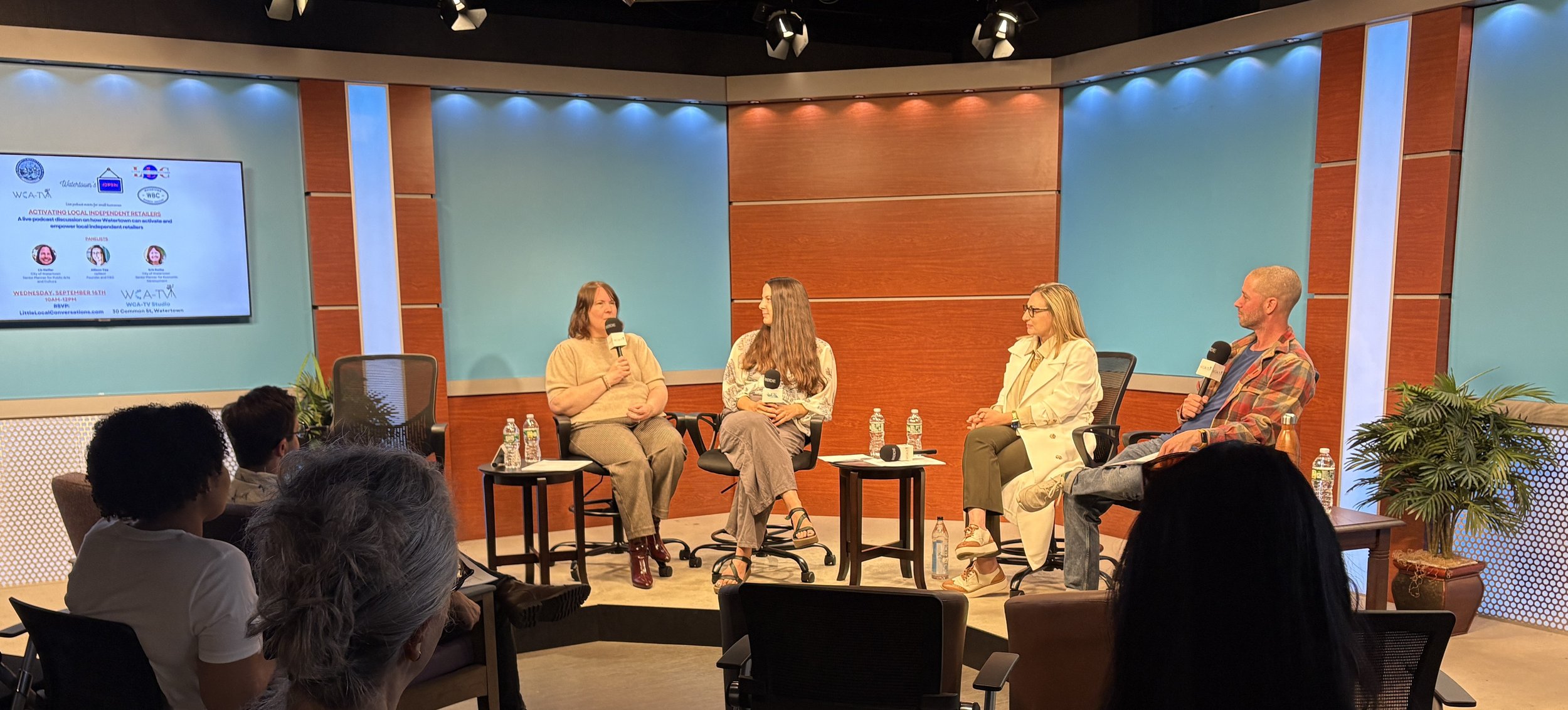
Left to Right: Erin Rathe, Liz Helfer, Allison Yee, Matt Hanna
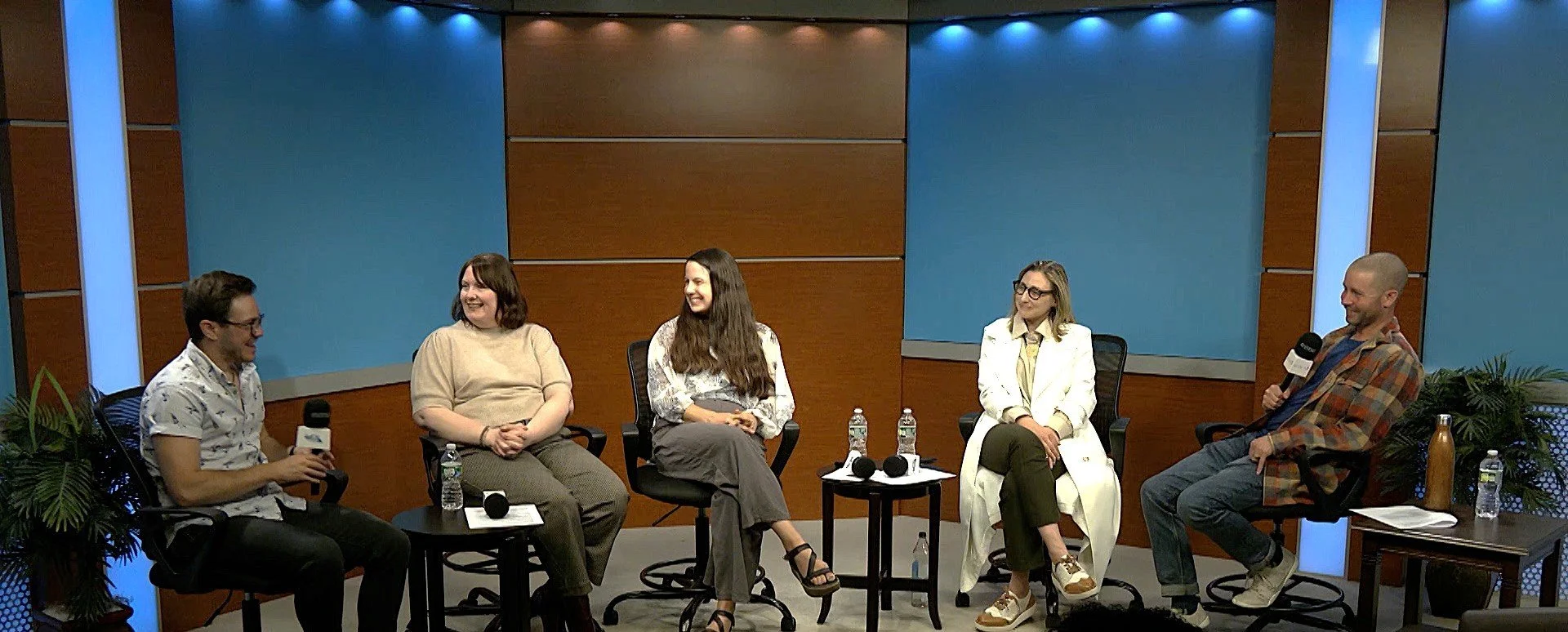
Left to Right: Anthony Eyring, Erin Rathe, Liz Helfer, Allison Yee, Matt Hanna
Released September 25th, 2026
(Click here to listen on streaming apps) (Full transcript below)
—————
Listen to previous Watertown’s Open episodes
Watertown's Open are live podcast events for small businesses, and it's a place to get local business owners together to discuss topics such as this. The project is a collaboration between the City of Watertown’s Economic Development Planner, the Little Local Conversations podcast, WCA-TV, and the Watertown Business Coalition.
—————
Sign up for the Little Local Conversations email newsletter to know when new episodes are out and keep up on everything Little Local Conversations.
Thanks to podcast promotional partner the Watertown Business Coalition, a nonprofit organization focused on connecting local businesses and strengthening our community. Check them out at watertownbusinesscoalition.com.
Thanks to promotional partner Watertown News, a Watertown-focused online newspaper. Check them out at watertownmanews.com.

This program is supported in part by a grant from the Watertown Cultural Council, a local agency which is supported by the Mass Cultural Council, a state agency.
Transcript
Matt 0:02
Hi there. Welcome to the Little Local Conversations Podcast. I'm your host, Matt Hanna. Every episode, I sit down for a conversation to discover the people, places, stories, and ideas of Watertown. This episode is a recording from a Watertown's Open event, which happened on September 16th, over at the WCA-TV Studios here in Watertown. And it was a conversation on how to activate local independent retailers. So there was a lot of good information and knowledge in this conversation. So let's get into it.
Matt 0:30
All right. Thank you, everyone, who came out this morning. This is, okay, there's lots of layers to this. This is Watertown's Open, which is a series for my podcast, Little Local Conversations, which is focused on Watertown. And this series is specifically focused on small business topics, local business topics, and it is in partnership with Erin and the Economic Development Planning Department for the City. Watertown Business Coalition, which I'm also a board member of, so I guess I am the representative today. And with Watertown Cable Access, thank you for hosting us today, guys. And doing some sound. It's always nice to have someone. Usually, when I do other events, I just hit the record and I'm like, I'm up here. I hope everything goes okay. So it's nice to have sound guy Dan back there. Appreciate it. Yes, did I get everybody? I think I got everybody. I'm looking at all the circles on our logo over there. Yeah, we got everybody.
Matt 1:23
So then the next step would be to introduce our topic and introduce the great folks who came here to talk today. So our topic is activating local independent retailers. How do we do that? How do we empower them? And we will define those terms because usually when I've been telling people that title, the first thing they say is, what do three of those words mean? So we will define that as we go through our conversation. But first of all, do you guys just want to introduce yourself, give yourself your one minute who am I, so people here know who you are? Can just go right down the line. Why don't you go ahead, Allison?
Allison 1:55
Good morning. Thank you so much for having me. My name's Allison Yee. I'm the founder and CEO of a company called UpNext. We're headquartered just over the border in Nonantum in Newton. And at UpNext, we do all different things to connect local emerging brands with opportunities to grow their business through brick and mortar. So through pop-up retail, through collaborations and placemaking opportunities. So we work sort of on all different sides of the equation, partnering with municipalities. We do incubators under the name Project Pop-Up. We also work with private landlords and developers who are open to adding the layer of retail through pop-ups or activating, we'll come back to that word, underutilized spaces. Anyway, long story short, I fell into this. I've been doing this for eight and a half years at this point. And we have a small but mighty team that does all kinds of cool collaborations and gets to work in a lot of different places to approach retail differently. And we also run a community for founders to connect called the Retail Playground. So it's sort of its own little mini ecosystem.
Liz 3:02
Hi, I'm Liz Helfer. I'm the Public Arts and Culture Planner for the City of Watertown. I work in the Department of Community Development and Planning with Erin sitting next to me. We actually share a wall. It's very nice. And I get to work a lot with the local creative economy. So I work with a lot of independent artists and cultural organizations. And we do things in Watertown like the Watertown Arts Market, which is an initiative of the Watertown Business Coalition. And we also started this past year a pilot project for art pop-ups in one of our kind of underutilized alleyways right off of Watertown Square. And we're hoping to continue that. That's kind of the perspective I'm bringing.
Erin 3:37
And I'm Erin Rathe, a perennial panelist on Matt's Watertown's Open podcasts. I'm the Senior Planner for Economic Development with the City of Watertown, working with Liz. And when my position was created two years ago, the city put economic development with arts and culture and open space very deliberately. So we form a team called the Community Design Division. And the three of us work together on what we want Watertown to be going forward. And so we work very closely to integrate, you know, how can we use the spaces in the city, open spaces, parks, the alleyway, other city-owned open space for arts and culture in order to drive economic development and small businesses. So I work with all the businesses in Watertown, small and large. But this is one of my favorite parts because I was an independent retailer many years ago. If I had met Allison, I might still be doing that but. Because what Allison does is amazing and I can't wait to talk more about it with her. But I transitioned from my retail experience into economic development because my favorite part of the retail experience was working with all the small makers I was bringing into my store and telling their stories of why they do what they do.
Matt 4:58
Thank you. Thank you all for being here. I'm looking forward to getting all your perspectives. There's lots of good knowledge up here. So why don't we start with the first question I want to open up with, which is what is an independent retailer? And then why is it important that we have independent retailers in Watertown and locally? So I will switch it up, but I'll go with you first and then each time I'll switch up who I go first. So you don't always have to go first.
Allison 5:21
Sure. Okay. So what is an independent retailer? So in my mind, an independent retailer is a locally grown or independently, you can't define the word with the word. Essentially I think of it as the heart and soul of our communities. So these are anything from a mom and pop shop to it could be a multi-location storefront or service-oriented. I see a little hybrid in my lens of expanding the definition of retailer or retail to include more categories. But traditionally, historically, it's like dry goods or packaged food. And it's really about the people being local and core to the community as opposed to a chain or specialty store that is at scale and across lots of places in a formulaic way.
Matt 6:12
Go ahead, Liz. What is, how do you view independent retailers?
Liz 6:17
So I kind of when I was thinking about the questions you were gonna ask and independent retailers from the perspective of arts and culture, you're talking about usually solo creators or small partnerships. We're thinking about people who are, retailer generally does mean you're selling goods of some kind, but we're not talking mass-made objects here. We're talking artisanal, locally made, made by hand. These are the makers that Erin was pulling into her shop. So when we're talking about independent retail, we're talking about the people who are working, living here in Watertown who are doing this type of work.
Erin 6:50
And I think I'll touch the third rail that nobody said with the independent part. So from an economic development perspective, we're talking about not a large chain, not corporately owned, not a franchisee. Those are very important to the ecosystem of our economy. So I'm not slamming anybody who's working in those areas, but when we talk about independent, the road is so much harder for them. They have to raise the money themselves, they take the risk on all themselves, they are working with their own intellectual capital. They're, you know, they're coming up with the ideas themselves. And in most cases, as Liz said, they're making it with their own hands. So while, again, I work with all businesses across Watertown, when we're talking about independent ones, those are the distinctions I'm making.
Matt 7:41
It's almost a handmade business. So now to touch on the second part of that, why are independent retailers important for the local economy, the local community? So Liz, you get to go.
Liz 7:54
Well, I think we can all acknowledge that we know that they're important, but why they're important, I would say that they are usually people who are developing a business in a location that they feel is amenable to their business. So they're often filling a gap in the local economy that probably large retailers aren't addressing in some way. So, you know, we have artisanal foods, we have wonderful craft, we have local galleries. These are things that exist because they can thrive here. And that way they're filling a gap that might not otherwise not exist in this space.
Erin 8:24
I think also an important piece of it is when you spend your money on a local retailer, it comes back into your local economy. More of every dollar stays in your local economy. So I don't have the numbers off the top of my head, but it's at least twice as much of every dollar that is spent in a local store, locally owned store. Let's take Fastachi, for example, because they're beloved and have been here in Watertown for a long time. They live here, their kids go to school here. When you are supporting Fastachi and you're shopping at Fastachi, that money is literally going home with them to their home in Watertown, right? It's helping them to stay here in the community, to raise their kids, to pay their taxes. And also they are more likely, just like you would be, to spend that money where they live, right? So that's a really big reason that we should be supporting the independent retailers who live and work within the community.
Allison 9:20
As you were speaking, I was imagining what any of our downtown districts would look like if it were completely void of independent retailers. It would be extremely predictable. It would be cookie cutter. You wouldn't know what distinguishes this community from any other. And that's just from the outside. But then when you go inside one of these shops and you're talking to the people that you're describing, whether they're staffing it themselves or they've hired family members or members of the community, your friends, whatever it may be, they're invested. They get it, they can have a real conversation with you, they can make product recommendations, they get to know you and establish that loyal relationship. And it's a completely different dynamic than if you're going into a big box store or a specialty chain, and it can't be replicated. It just goes so much deeper than the surface.
Erin 10:12
Can I jump on that for just a second? So my older child just went off to college this fall, and we were doing college visits last year. She really wanted to go to the University of Michigan, which is in Ann Arbor. So I took her there. It was my dad's alma mater. So it was like going home. It was very exciting. I was very happy to be in Ann Arbor again and you know, feeling all this. And we went into a little store called Rally House that's all Michigan gear, three floors of Michigan gear. And I was so excited. And then we went to the next college campus. I don't even remember which one was next. Oh, Temple, I think, was the next one we went to in Philly. And there's a Rally House in Philly that has all Temple gear. And so this, what I had thought of as like, oh, this cute little store that's carrying only University of Michigan merchandise. How great to find a store that's just U of M stuff. And then you go to the next college town and there's a Rally House selling the exact same products, branded with that university instead.
Matt 11:14
Okay. So we could go down this for a while. So before we leave this introduction of what is an independent retailer and move on to activation of those, is there anything else you guys want to get in about that definition or how we're defining that?
Liz 11:27
I think what we're angling at here is the word would be identity. We're talking about local identity. We identify our downtowns by the stores and the retailers that exist in them, and we get to know them. I love my favorite little cafe in town. You know, I know them and I love it. And that's a special experience. And we all want that local identity, something that we call our home.
Matt 11:45
Yeah. Great. And we'll get more into this as we go on. But let's move on to the other words that people sometimes are like, what does that mean? So we're talking about activating local independent retailers. What does activation mean? And what are the forms of activation? So, Erin, you're next.
Erin 12:06
Activation really just means filling space that isn't currently being filled, right? Using some space that is, Liz used the word underutilized, right? Merchants Row alongside CVS, where they did the pop-ups this summer. The WBC and Public Arts and Culture did the pop-ups. It's an empty space. It's an alleyway between the parking lot behind CVS and Main Street. It's a nice cut through. There's a beautiful mural there now that arts and culture worked on to make the space a little bit nicer. But it's just an alleyway unless we activate it by putting something there. I'm going to say really quickly, we, I don't want to jump ahead and define the word pop-ups necessarily. Pop-ups are one of the ways that we activate. I'll let somebody else actually define what that means. But on the way in the building today, there were some guys from the freight farm, which is located outside. They're working on the external portion of the freight farm. And they said, Oh, you're here to film a podcast. What's the topic? And I said, pop-ups. And they said, What? What is that? And I said, you know, pop-up, like a pop-up market when you do something one day. And they said, Oh, you mean like when we take food from the freight farm and we sell it at the farmer's market? And I said, Yes, exactly. So I think people understand the concept. I mean, they've seen it more than they've maybe heard the words that define it.
Allison 13:29
I love that. It's funny because over the years, people have become more familiar with the term than when I first got into this line of work. Anyway, I digress. But essentially, an activation in my mind is yes, it's using underutilized space, but it's also like bringing energy or excitement or movement to a space. And that can be in so many different forms. So it can be anything from just a short-term event to a market to a pop-up to, another term, pop-in. Or I mean, it can also be a permanent activation. It can be a full-fledged storefront or event space or anything really beyond that. But when we talk about it in this context, an activation is usually designed to get something up and running quickly or to bring fresh eyes to it or to help people see it in a new way, like you've done with the alleyway, because there's all these possibilities, but they get easily overlooked if we don't give them dedicated attention or create a thoughtful plan around it.
Liz 14:35
I'm gonna build on the like it could be an event, it could be a collaboration. Several of the things that we've worked on, well, almost all the things we've worked on are collaborations, is the city working with so-and-so to make something happen. We don't do it alone. We should never really do it alone because it doesn't work unless we put it out there in a broader way. For example, the Watertown Arts Market came about because after the pandemic, Business Coalition said, What can we do for artists? We said, Well, people have been asking for a market experience. How do we make it happen? Well, the city can certainly grease the wheels on getting the permits and getting the park and making sure that all the setup happens. And through that collaboration, we're able to do something really powerful that has really succeeded over the past six years. And then it's like, well, how can we do this pilot project for a smaller market experience? Because we've been asking for that. Okay, we have a location people have been talking about for years. But some of the things we've also done are things like, what can we do to get more music into restaurants, activate that space more, drive new audience. You know, it takes changing some licensing procedures. There are things that are sometimes embedded in governmental ordinance that need to get changed to make things possible. And that's what we get to help with in order to make some of these activations more possible, which is exciting.
Matt 15:49
Yeah. And when you mention the Merchants Row, like that's getting into like what's unique about your local community. Because that mural went up and I set up a meeting with you and Kristen and Doug to go there and like, how can we activate, whatever, this space? And then I backed out, but then you guys figured it out. So I'm glad that you guys do that. But like knowing what's going on in your community and looking for those.
Liz 16:11
But that conversation, that started like 20 years earlier, there had been a former mural there, and then a handful of people have kept saying, What are we gonna do about Merchants Row? And I said, I don't know yet. So we keep coming back to the same thing. So if they reappear over and over again, we act on them.
Matt 16:24
Yeah, so it's listening to the community as part of the activation, too. Yeah. Great. Next question is what is the state of independent retailers in Watertown? And then what are the current barriers that they're facing? I know there's lots of different angles on that. So why don't we give the Watertown people the focus for what is the state of independent retailers in Watertown?
Erin 16:48
The state of independent retailers in Watertown is, I mean, it's strong. We have a very high concentration of small retail here, independently owned mom and pop shops. Coolidge Square is a whole corridor full of them. But even in little unexpected places, right? You know, like on the Galen Street corridor, Farina's bike shop has been there for more than 50 years and going strong. Actually, they're ingenious because they found a niche in the market where they repair bikes, but they have paired that with small engine repair and snowblowers, maintenance and sales of snowblowers. So they've adapted to be seasonally relevant no matter what season is going on. The barriers, I think, rents are very high. And we can talk more about this as the conversation goes on. But when, just like with housing, when a community is where people want to be and there's a constrained supply, we don't actually have that many empty storefronts in Watertown.
Erin 17:48
Sometimes I hear from residents why do we have all these vacant storefronts? There are a few. The issue is that they're prominent. It's not that there are tons of them, it's that they're in key locations that we would love to see something located, but they're pretty sparse. And each one of them has its own challenges. It could be the landlord, it could be a zoning issue, it could be the rent, it could be that the space would need to be completely reconfigured and that drives the costs up. So it's very difficult to, you know, to have a blanket statement of why aren't our storefronts being filled? It's a combination of these factors, but we are aware of them and having conversations like this helps us to move in the direction of filling them.
Erin 18:36
Every time we've done a podcast here in the studio, there have been people in the audience who have then come and talked to me about their business ideas, which A, let me just say, please do that. I love that. That's a big part of my job, and I love doing that. But again, just I want to point back to you, Matt, actually, because you don't speak much during these, but you are doing something really important to this ecosystem, which is just bringing people together to talk about it and to highlight where the opportunities are and it's having an impact. I don't need to keep talking and talking, but the guys from Halva, who just opened their bigger storefront right on Mount Auburn Street, moving from their little diner at the corner there, they were in the audience for one of our conversations. I actually don't even remember which one, but they are some of the people who approached me and said, we'd like to expand. We just listened to this conversation and we're inspired and we're ready to make a move. So I want you to know that these conversations are having a real impact in the community. You're helping us to overcome some of the barriers too.
Matt 19:39
Thank you. Yeah, obviously, I think conversation is important and helps shine a spotlight. But I want more of your knowledge. So, Allison, why don't you tell me about what are some of the barriers that you're seeing? First of all, how much are you in Watertown? Like, do you know Watertown and its scene? And then where are you working and the general barriers you're seeing all around?
Allison 20:02
So I've lived right near Watertown all my life. So I know it pretty well, but I also don't know little pockets of it. And so it's interesting to hear you speak to where it's concentrated. I feel like I've seen Watertown blossom in all the best ways over the past several years. And I feel like the leadership and the team here, right sitting next to me, is just really invested in bringing it essentially leapfrogging and has so much opportunity to move faster than perhaps some of the neighboring areas. Arsenal, I did grow up going to the Arsenal Mall on an all too regular basis, but that transformation of the space has been really pivotal. And it's not hugely populated with local retail, but I do think it brings a certain vibrancy and convenience factor. And so the more that you can create density and interest and collaboration, as you said, whether it's, it's really key actually when you can collaborate with larger companies and smaller companies and move the traffic around. So I think there's a lot of opportunity in that regard.
Allison 21:20
Barrier-wise, Erin hit so many of them. So in my work, we try to create as accessible an entry point as possible. So what are the things that we can do to kind of break down each of those barriers? The cost of a storefront. Maybe there's a prime location, but it's too much for one independent retailer to take on. Can you build a partnership or collaboration with multiple retailers to come together and share the space and, you know, share the expense, the staffing, the marketing? There's so many different things that can be built together that are just a huge burden for one independent business to take on. Beyond that, we're seeing a lot of experiential retail. So a yoga studio that's bringing in a retail component or a food space or restaurant, a cafe that's adding retail. Vice versa, bringing some hospitality component into a retail setting. And I think that's where retail is headed. I think it's all merging. Arts and culture, bringing artists not just onto the walls, but into the whole experience. So I think the more we can take that mindset and just make each of these really challenging pieces that much easier, that much simpler, that much more it takes a village oriented. I think that's how we'll chip away at it. It also definitely takes a lot of long-term planning and investment and willingness to experiment, put pop-ups and markets and tiny house retail, whatever you can do, bring it into a visible public space and then have those conversations out in public with all the people who are shopping and just help everyone understand that it is really not easy. It is very hard to run an independent business. And the more people that get it and can support, the more it'll move us toward options.
Liz 23:03
I'm thinking a lot about the perspective of what we might call, I know you guys did a thing on solopreneurs, about artists who are working independently, who might have a studio, but no brick and mortar for or no gallery that's showing their work, or maybe they're just they're doing a we don't get into the distinction between art and craft, but maybe they're doing a craft of some kind, some fine artisanal things. And how do they get out there? And one of the barriers that we had seen is part of why we created the arts market, was they don't have opportunities to show their work without doing this type of partnership, or you know, maybe they don't know about how to do a pop-up or getting connected in this way. And so creating those opportunities, making sure that they exist, that they know who they can talk to about it, that they know and connecting them with resources.
Liz 23:45
So there are some really cool programs that exist, specifically for the creative sector and independent artists. There's, I'm gonna plug a specific program, it's called Assets for Artists. It started out at Mass MoCA, oh God, over a decade ago now, and now last year it got incorporated as its own nonprofit. And what it does is it provides business and like tax filing, acumen, and training for independent artists across Massachusetts, and they've expanded to include most of New England at this point. It's a wonderful program. They also do like a grant match funding for startups for people who are like, how do I build this? Okay, do the training, get the skills, and get this grant after you complete your training. They are really doing something that's unique in this sector. I would like to see more of that. And we'd like to support programs that are like this, that are training independent artists to succeed in this way because it's a very hard thing to do.
Liz 24:35
And I will note that we started doing a partnership with MassArt with doing public art installations, should be coming a gap again this fall. Looking forward to that. But a lot of universities are now, and I will say it's very recent, starting to do training for their students in undergraduate and less so in graduate programs, assuming that graduate students might succeed in some other ways. But undergraduate students to do actual business training. Like here you are, you're gonna graduate, you're gonna lose all these studio resources you've had access to. How are you gonna make it? So we're seeing more of this happen, but we want to make sure that we're the continuation of that. And so that's reducing the barrier to succeed in this way.
Matt 25:15
A couple things for barriers that I want to go down too is the landlord's perspective. I think that's an important voice that we don't necessarily have on the panel today, but what are you hearing from them in terms of why they're open to these type of ideas, not open to these type of ideas? What are the barriers there from that perspective?
Erin 25:36
I'm gonna jump in, but it's mostly to put Allison on the spot in a second. So some of the hesitation that landlords have is the uncertainty. If you take a chance on an independent retailer, there's a lot more risk than if you sign a real estate office, right? They're not going anywhere. They're a real estate office is affiliated with some brand, you know, Coldwell Banker or whatever. So they have instant name recognition, instant visibility, instant built-in audience for their product, et cetera. So there's a lot of risk if they're gonna sign a lease with somebody who's never done this before. They don't know if this person has any business training at all, all of the things that Liz talked about. But, and this is where I'll toss it over to Allison, Village Bank in Needham has just built a new branch that they from the start decided to dedicate pop-up retail space within that branch. And I believe it's opening this morning, right?
Allison 26:32
The first one's, actually the first one is Wellesley. It's opening right now. Yes. Yes, and yes. So to elaborate on that, I guess. The Village Bank, which is a Newton-based bank that's expanding into Wellesley and Needham, and actually leasing previous retail space or restaurant space in those locations, which opened up an opportunity for them to think differently because it was more square footage than they needed. Prime location, very community-oriented bank who wanted to do things a little differently, knowing that no one gets excited about a local bank opening down the street. Yet another bank. Why do we need this bank branch in this prime location that could have been who knows what? And so they approached us to talk about how an incubator space could coexist alongside the bank and fast forward less than a year, really. And today we're opening this first location where it's half bank branch, beautiful new, shiny space, but very traditional, and half boutique retail incubator. And the very first brand is a local independent children's clothing brand called Piper and Cloth. Stunning, gorgeous, handmade, sustainable, attention to detail, founder-run brand who has only done e-commerce and the occasional market. So this is her first foray into a retail space. And there's actually a glass wall that separates the two spaces. They each have a separate entrance. The wall is open during banking hours, so you can flow freely between the two spaces, and then it closes so retail can continue operating their hours independently beyond bank hours and host events and invite the community in.
Allison 28:15
I had been waiting for this type of conversation my whole career because it's exactly that approach that you want every landlord to have to take a chance to think differently about their space and what it can provide. They're not the owner of the building, but in the owner's case, I mean they get the bank rent and the benefit of local retail. And there is quite a lot of local retail in the church square block where this is opening. But the space is completely free to the retailer. There's no cost for rent, there's no cost for utilities. They're providing their inventory and their staffing, but the bank actually can't make money off of the space. It's per regulations. So it's ideal in every sense. It's a true partnership. It's been a really beautiful process. And then we'll be announcing that Newtonville, which is a current Village Bank location, will be renovated and turned into an updated bank branch. It's called the Village Shop, is what we branded it. So the Village Shop location, and actually a storefront for the Newton Public Schools Connections program. So they do retail training out of the high school for students 18 to 22. And they haven't really, they've been bumped around. They haven't had a real storefront or space to do this. And now there will be a third storefront. So it's really just expanding on what's possible. I could go on and on, but yes.
Liz 29:34
That's fantastic. Okay. I'm going to talk about back when I, the public arts and culture program for the city was getting started back in 2021. We immediately did what we titled the Artist Workspace Survey. And we put out a survey and asked artists who are working or living in Watertown, what do you need in order to work here well? What will make you succeed here if you have workspace here? And we got square footage, we got different lighting and different amenities. What do you actually need? And we asked all genres of artists. We're asking musicians, we're asking painters, we're asking sculptors, people who are doing all sorts of creative enterprise. And we ended up with some really valuable information that we have put into a report. And that when I talk to developers who are putting in new builds, we say, would you consider workspace like this as something you would put into your spaces? We've had a few that are interested. None of it's been built yet. Fingers crossed, it'll happen in the future. But what we did is we put some data behind this is exactly what we need. And that's been really helpful when we go to ask for exactly what we need.
Liz 30:36
Independent of that, there's been a lot of talk about live workspace or other styles of workspace. And these are all things we're working towards. But some of the steps we've taken in between 2021 and now, we ended up with a designated cultural district in 2024, which is something we can leverage with the state and within the city to make progress towards doing something else with workspace. That's another group that can help advocate for something like this. So we're creating the foundation to do a little bit more, which is pretty exciting.
Matt 31:03
Yeah, you have a thought.
Erin 31:05
So I'm gonna be a downer for a second, just to explain. We often hear from residents in particular why did that building get built and there's all this commercial space at the ground floor and it just sits there empty. There is actually a reason for that. There are, there are several reasons for that. I'm trying to think about how to say this carefully. There are several reasons for that. One is that, fortunately or unfortunately, in the tax code, if you have a building and a large portion of it is not occupied, you can write that space off on your taxes and take a loss, and that helps your bottom line. So there is not necessarily the incentive for a developer to fill that space because they can have that tax loss. That's a tax issue that is not even in the city's control. This is way above our pay grade.
Erin 31:55
But another reason for it, and this is actually something that I'm still learning, even though I've been in economic development for 10 years, when a developer is putting together what they call their capital stack, their financing for how their project is going to happen. They're putting in investment money, they're putting in loans, they're putting in their own capital, they're putting in all these different ways that capital comes in. The banks that hold the financing in particular, they have to show those banks what they think the rent will be when they are ready to lease out that space. So naturally, they're gonna say, you know, they're gonna list the highest rent possible because they want to show that it's gonna be a profitable building and it's gonna be worthwhile. Once that's locked in, that's written into their financing terms then. So if they say to the bank, we will lease this space out at $50 a square foot, let's say, which is a, that's a high rent. And Allison can weigh in on this. I mean, that's a high rent, but it's not an outrageous rent for retail. They can't then go back and say, you know, like, oh, well, this hasn't rented in two years, and so we'll try renting it out at $35 a square foot. The bank won't let them do that. That would be violating their financing terms. So without refinancing the whole project, they can't change that.
Erin 33:07
And that is another sort of underlying economic reason that we don't see storefronts in new commercial buildings get leased out quickly. Again, so there's one not great incentive to push them to rent it out, but also they are in a bind where they can't just have cheap rent. And so, like I said, it's a bummer. But I think it's important to understand these economic realities because it does often feel when you're walking past a brand new building that has not been filled yet. It's like, why did we even build this space then? Why is this whole ground floor just sitting there empty? And it doesn't feel good. But that's another barrier to why it sometimes takes a very long time to find the right retailer.
Matt 33:53
Yeah, I'll let you respond and then I want to move into our positively, what are solutions we're seeing. But yeah, go ahead.
Allison 34:00
It's a little bit of a segway into that because that's interesting. I didn't know about the loan requirements. The problem I see again and again with those spaces is that it's required by zoning that you have a ground floor commercial use, which is great, but they just build a raw 10,000 square feet. The expectation is that they're bringing in one or maybe two anchor tenants, meaning like a big supermarket and fitness use, whatever it may be, something that really can take a lot of square footage. And so they're putting themselves in that position to just sit on the space. Whereas what I see really working and where I would love to have some perhaps legislation involved, is that these spaces could be finished into vanilla boxes, like more turnkey than this raw, not even wired for electrical, small storefronts that can accommodate so many different uses. And even if you're paying $50 a square foot, if you're only renting 300 square feet or 500 square feet or even a thousand, it just gets way more accessible to way more types of uses. And therefore, we don't sit with vacancies and we can have more interesting things happening. And I just think it's short-sighted. They're kind of checking the box on the commercial space because the focus in those buildings is residential. But think how many more people would want to live there if there were really cool little cafes and shops at the base of the building. So I would love to see, I don't know how the process works, zoning or requirements-wise, but if it's a special permit, I think there's a negotiation. But if it's not, is there something we can do to incentivize that earlier on?
Matt 35:39
You have a quick answer on that?
Erin 35:40
I do have a quick, I mean, the quick answer to that is that again, with the creation of our division within planning and zoning, Liz and I are at the table now when we have conversations with developers. When they bring in their site plans and they're talking to the planning and zoning department, we are able to sit in on those conversations and say, just like Liz said, would you put art in here? Would you consider carving it up into smaller spaces? I mean, that's the one that I'm always hitting is like, please don't hold out for a 10,000 square foot tenant. Please make this into, you know, four 2,500 square foot spaces or even more smaller spaces. For a frame of reference, not that any of you came to my store when I had it, but the storefront that I had, it was a corner location. So it was quite large actually for retail. It was about 1,250 square feet. And that's a pretty big space for a first-time retailer. That gave me, you know, I had 900 square feet of the front of house, and then the rest was my back of house inventory and all of that. So I think we all think of 2,500 square feet in terms of like maybe a house. That's very large for retail. You want something that's more in the, you know, 500 to 1200 square foot range would be kind of a sweet spot for a very small independent retailer.
Matt 36:58
Awesome. Well, again, that could be a whole other thing we could dive down forever. I want to make sure we're trying to hit on all our topics here. So we've already talked about some in the course of this conversation, but talk about creative solutions that you've seen other places that you'd like to see in, that are in Watertown that you’d like to see working. And then after that, we'll invite our retailer here to come up and we'll kind of dig into their story and how that ties into what we've been talking about. So yeah, what are you seeing for, let's work our way down. I feel like we've started down there a bit now. Allison, I'll put you on. What are some creative solutions you've seen in other places and that you’d like to see?
Allison 37:32
Well, we actually work in a lot of other communities doing project pop-up incubators. We haven't yet had the opportunity to do that in Watertown, but it is something that we've probably done in 12 different Massachusetts municipalities, maybe 20 or 25 different storefronts or spaces. So how this works is that it's grant funded. And since the pandemic, since 2021, we've tapped into a whole lot of different grant sources from Mass Office of Economic Development or ARPA funding. And so it's always uncertain and evolving. But the concept really works because you're taking a vacancy, typically a vacancy. Sometimes it's an outdoor little village or a plot of land, but something that's underutilized or been sitting vacant or losing its tenant and getting it into that turnkey condition. We're not doing, we try not to do major build-outs, but it's just making it inviting and ready for retailers, complete with fixtures and POS setup and branded signage and all of these different components that really make it much harder to get up and running quickly.
Allison 38:40
So resources, you mentioned resources, giving them education, a community of other people and experts that they can turn to and managing the relationship with the landlord, which is also really intimidating for first-time retailers. So you're creating an environment where they can focus on what they really know how to do, which is create their product, market it, tell their story, and then teaching them about all of the other components. Often it's for a season. So that's three to four months or so. They're getting the ups and downs of retail. So if they're getting the holiday season, they're also getting January. They're getting to experience what it's really like to run a storefront. And then sometimes we're pairing multiple brands in that space. So they get that power of collaboration and learning from each other. But what comes along with it being grant funded is that it's reducing the market rate rent. So it's bringing a stipend into the mix where it's really giving them that accessible bite at the apple. They're still having some skin in the game, paying something toward the rent, knowing transparently what it really does cost to be in that space at full market, what the utilities are, all of those things are really important. Even if you're not starting out paying them, you have to have an awareness because the whole goal is to incubate them to be able to thrive and do this on their own elsewhere. We have seen many times over they open a permanent storefront or another longer-term pop-up or something in the community. So it really gives them a chance to build their customer base and then stay and evolve.
Allison 40:04
And then on the other hand, some people are like, this was way too stressful. I don't want to be here every day. I'm going to take my business in a different direction. And I always say that's just as valuable, if not more so, because that would have been someone struggling through a multi-year lease and not making the revenue they expected, or just getting themselves into a sticky situation and the landlord alongside them. So that's one example of what I'd love to see more of.
Liz 40:31
I'm gonna go a slightly different direction. I love pop-ups. I think the pilot we did this past summer and the arts market are great examples of things that are succeeding that we want to do more of and reconfigure to see how we can do it better. I am also really interested in opportunities that are brick and mortar that are residencies for, if I'm talking about artists in particular, I want to see more residencies in our city. The Mosesian Center for the Arts this past year launched their first residency program. It's been wildly successful. It's a wonderful pilot for them, and I think that's gonna succeed going forward. There's residencies through the Mount Auburn Cemetery, which they've actually been doing for 10 years, but people have only been finding out about in the past few, because now that program is really underway. And if people don't know, their address is in Cambridge, but they're mostly in Watertown. And there's actually a residency program out of Project Save Photograph Archive, which is down on Pleasant Street. They work with photographers and put on exhibitions there. These are other ways to get people into spaces where they want to continue to work here in Watertown.
Liz 41:28
And I'm really interested. Oh God, I'm gonna say it publicly, and Erika's gonna be like, oh. I want to see residencies through our departments in this city. We're working with DPW and other.
Allison 41:37
I love this. Can you explain what a residency is?
Liz 41:40
Oh yeah, a residency. So an artist residency, there's many different formats, but often it's artists will apply, they'll get selected, they'll come and do two weeks, four weeks, six months, a year, two years sometimes, where they will be working in a specific space. Sometimes they're asked to develop a project proposal beforehand. Sometimes they're asked to develop something while they're there. Sometimes it's open form, do whatever you want. So I am a working sculptor. I've done many residencies. They've taken all different formats. I've run residency programs, which is why I think we can succeed here. But I'm really interested in seeing something where an artist would be selected to come and work for a year through one of our departments. We would give them dedicated space to work. We would help them if they needed to be closer for housing. We would do something to ensure that they could really succeed in this role.
Erin 42:31
I have been trying to get some of our larger businesses interested in, residencies are interesting. We should talk more about that. But some of our larger businesses, I mean, they're bringing in, you know, 50 or 100 employees every day, which is a built-in audience, right, for something like a pop-up. And it has happened before at the Lynx building, which is where C4 Therapeutics and AddGene both are and a few other companies, but those are the two major employers in there. They have done pop-ups in both their, I think in their atrium as well as in their parking lot. We were not involved in it. It was not something that the WBC was involved in. It was just something that we heard about and helped promote a couple summers ago. And someone recently asked me, like, well, what happened to that? That hasn't happened again. So I reached out to them. And it turns out it was an employee at C4 who was, or maybe at AddGene. Now I'm going to forget. But anyway, it was an employee who had organized that and just gotten the landlord's permission to run this pop-up over a couple of weekends.
Erin 43:35
But the operations person that I spoke to said he himself does not have the skill set to run something like that, but he's very open to it and he has the connection with the landlord. He'd be willing to talk to them. I have talked to other companies that have a lot of space. We also have some vacant buildings that have a lot of space, office buildings and lab buildings. So that's an angle that I'm trying to work on right now is if we could rethink, in a temporary way, how to reuse some of the office and lab space that we have for arts, culture, markets, something along those lines.
Matt 44:12
Yeah, there's a lot of paths we can go down here. I think I want to shift gears here to inviting our retailer up here because I think this will give us, you know, a real life story, an example to talk about, and also will lead to maybe examples of all these different examples where they could fit in. And Liz, how many people did we have at the Watertown Arts Market in terms of vendors?
Liz 44:34
Oh, vendors. We end up with about 120 artists who are living or working in Watertown are represented there and cultural organizations. I will say in the Watertown Cultural District, we have about 30 cultural organizations currently represented. There's a lot of arts and culture existing in this city. And if you add in all the bands that performed, oh boy, that number goes way up. So yeah.
Matt 44:53
I'm setting that up because I think there's a lot of people in our Watertown ecosystem that are in a similar boat as to Anthony, who was at the Watertown Arts Market. So Anthony, you want to come join us?
Liz 45:05
Sweating it out at the Watertown Arts Market.
Matt 45:07
So, Anthony, why don't you introduce yourself and a little bit about the journey you've gone through with your glasswork in the past handful of years here. So go ahead. Welcome.
Anthony 45:19
Sure. Thank you. And I feel like I've learned so much in the last like hour or so listening to everybody, listen to all the resources that I'm now quickly going to apply for. My name is Anthony Eyring. I'm the owner and maker behind Ampersand Glassworks. Just a really quick background. I started working in stained glass probably about like seven-ish years ago, seven or eight years ago. I took a class at the Cambridge Center for Adult Education and really fell in love with it. And I would say over the, on and off, right after learning, you know, making small projects on my own, getting some commissions from family and friends, getting better at what I wanted to do, having to take time off to work more. The journey that I think a lot of artists go through, you have to step away for some period of time, getting back into it, relearning your skills. About three or four years ago, I was able to buy a house with my wife and have some dedicated space to make a really big mess. And she's very generous in letting me do that in our home. And I was able to devote more time to making glasswork. And that made me more curious about new skills that I could learn. And got brave enough to sell at my first market last year at the Watertown Arts Market. It's my very first one. The first of I think four that I did last year. In that time, I also got my LLC, another brave moment, which is way easier than I thought it was going to be. Turns out you just hit a button.
Erin 46:56
And pay $500.
Anthony 46:57
And pay and yeah, drop, drop some cash. Yeah, now I'm going and selling in a few other markets this year. I've already gotten to do the Watertown Arts Market this past summer, trying out some new ones and seeing what the future holds. I'm not really sure yet.
Matt 47:13
Yeah. Thanks for sharing that little journey there. I know I had asked you to come up with some questions beforehand that you wanted to ask, but has anything changed after listening to anything? Like, do you have a different question or do you want to start with these questions we had come in with?
Anthony 47:27
I think I'm curious what the, so that journey is like around seven years that I kind of laid out. And I don't know exactly how long or what I can devote because this is still a side hustle for me. I work almost full time for doing design work. But I'm curious what kind of timeline could somebody else expect to be able to, maybe retail co-owned retail space or something like that is a goal. But no idea what kind of timeline that would be, you know, someone would be looking at. What are y'all's experience in that kind of thing?
Matt 48:07
Who wants to, for this section anyone can just raise their hand and chime in.
Allison 48:11
Just to clarify, so timeline as someone looking to get into retail, timeline to launch, timeline to realize that part of the dream.
Anthony 48:19
I think from the point where you're like, okay, I'm selling at several markets a year. And I would like to maybe at some point be a partial owner of a retail, or like sell my wares with a couple of other artists or something like that. That's something I learned up here. What's a realistic timeline for somebody to be able to move? What's that pathway, timeline look like?
Erin 48:43
It completely depends on your appetite for risk. I was self-invested when I had my store, never turned a profit in four years. Paid all of my employees. I did not pay myself. I think that's unfortunately pretty common, pretty realistic, which is why, again, such a fan of Allison, because I didn't have access to something like that when I was trying to do it myself. I was bringing in a bunch of makers. I mean, it was, in a sense, it was a collaborative effort. You know, I was showing many people's work, but all of the risk was on me. And it was tremendously expensive. So I don't have a good answer for you of like what's a realistic timeline, because I am not sure how you go from selling at markets to successfully opening a shop and having that under your belt. I wish I had a better answer for you. But I think it's again, it's about your appetite for risk. You can take out loans and things like that. But then obviously you're carrying that and having to make that payment every month.
Liz 49:51
I'll talk about it from the other side of this as an artist who does sell work. And I did work full-time out of my studio up until I took what I consider a real job with benefits. I was doing a combination of public art. And so those are much larger commissions. If I got two of those in a year, oh big money. But if I wasn't getting those commissions, then I was doing small commissions and selling work out of markets. But I was also picked up by a gallery for a certain period of time. And I was showing through cooperative gallery spaces and picked up through some shops where I was not managing the brick and mortar. I never had a desire to do that. But all I did was get my work picked up and put into those brick and mortar spaces. And that was helpful. I didn't have to manage that. I just had to show up with the work and then they sent me a check when the stuff sells. Oh, very nice. And if they didn't send me a check, well, I pulled my work. Different scenario.
Liz 50:38
But it takes anywhere from, you know, it took me a while to get into these spaces. I always had the opportunity to sell my work, which I'm very grateful for. Even in undergrad, I was selling work. So I never had, I knew my work was valuable to somebody somewhere, just had to find that audience. And that is kind of the tricky bit. You have to do the market research to know your audience, to know where is this going to succeed. And so I was selling out of like museum shops and other spaces where they were anticipating some kind of cultural fare. And that was the most successful for me. But I didn't start doing larger public artwork on commission basis for maybe a decade into my career.
Allison 51:16
I think the timeline is whatever you want it to be, candidly, because we work with brands that literally started the year before and they're opening a pop-up, not a permanent storefront, but making it their full-time focus and going all in in a short period of time. And we work with others that have had it as a side hustle for 10 years and are deciding to put more focus on it. I would encourage you to mitigate risk at first and really find what the right fit is for you. Because to your point, Liz, there's so many different formats. You can wholesale, as Heather has been experimenting with in the audience. You can do a shared space, you could do consignment, you can do a pop-up full-time or with others for a shorter period of time. You can stick with the market route. The museum shops sound amazing. So there's just, there's so many different variables and things that you need to try on for yourself, both for your work and your product market fit, but also for your lifestyle. How often do you want to be staffing something? What type of overhead are you comfortable taking on? How much inventory can you produce? There's just a lot of different components that you need to think through. So I would say giving yourself the chance to play around with a few scenarios, test things out that aren't going to break the bank, but might be really great data points for you. And that will help you steer toward a direction that makes sense longer term.
Erin 52:40
I just want to add to that kind of an undercurrent of what we've been talking about here is that there is a lot of business to it, right? And I think that that is sometimes very difficult for artists. I mean, Liz touched on this that people who are creating, they're very focused on the creating. I'm not a creator. I don't know what the timeline is like for that. I think it can be discouraging. As Allison said, she's had people try a pop-up and then go, oh, whoa, this is a lot more hands-on than I realized, right? I've spoken to some of the people at Bow Market in Somerville. I've spoken to the guys who started and run that. I asked them, what are the barriers to success there? And for some of their retailers, they bring people in for six months to a year with an option to sign on for another year. They have had retailers who are like, oh, well, I don't want to be open on Wednesdays or Thursdays because I'm doing X, Y, and Z, or oh, well, I can really only be here from 8 a.m. to noon, and then I have another job, or I have child care needs, or whatever. And if you're not there for retail hours, it's very difficult for people to find you and to establish an audience.
Erin 53:52
And so I think it's important, not in any way implying that you aren't doing this. I think it's important to have your eyes wide open, that if you're going to go into storefront retail of any kind, you have to be open all of those hours. Somebody has to be there. Generally speaking, you don't want even just one person there, right? Because for safety reasons, you don't want to be in the back working on the art and there's nobody out front and you know, all of that. So the costs add up, but the time commitment also really adds up. And I think that that's something often artisans don't realize when they are making the leap from, say, a market to a more permanent space.
Matt 54:36
Yeah. And then in terms of resources, I mean, you're a wealth of resources with everything you do there. Do you find that you are reaching out to all the people that need those resources, or is there enough resources to go around? Are you full up? Like I'm curious about that relationship too, getting the resources to the artisans and vice versa.
Allison 54:57
I think there's always opportunity to spread the word about resources. They certainly don't reach everyone. The organization at Mass MoCA, we've worked with them in collaboration through a project in Lowell. And there's so many different pieces, to your point about running the business and what experts to bring into your corner. I would say, so the retail playground, the community that we run, was really developed out of this evolving, glaring need. So witnessing firsthand how the collaborative spaces were really impactful for all of these individual founders, not just because it's deferring the costs and the workload, but because everyone is coming from a different background. A lot of people are making a career pivot from accounting or legal or marketing or whatever it may be. And so they learn so much from each other, just being in that shared space and brainstorming and offering tips.
Allison 55:52
And so what that evolved into, actually, first we launched a course, the pop-up playbook, because there's a lot to know about launching a pop-up completely independently. But as we were going through that, there's this community component. So we evolved it into a platform that is designed for founders to be able to have direct conversation without an intermediary and to have events where they can come together for retail therapy, for all these different things to just have really candid conversations because you don't want someone sugarcoating it. Actually we, after this, have a virtual program about avoiding burnout because we're almost at the holiday season. If you’re excited about your brand, you might be signing up for a market every weekend and it's actually exhausting. And so we have people that are, even if their business is thriving, they might personally be like really desperate for that self-care. So what can you do to get ahead of it? All that to say, there's just so much to know and so many resources available that you can tap into. And the goal would be to sort of take it in stride. So not overwhelm yourself, chip away at what goal you want to accomplish. And then you'll meet people, such interesting people along the way, who have so much perspective to offer or their own resources or introductions or landlord relationships. You just never know what doors will open. So I don't know if I answered the question, but that's where my mind went.
Matt 57:11
Yeah. No, I think that's yeah, that's good. Anthony, do you have other questions from these or just from some of those responses? I want to give you another chance and then maybe we'll open up to Q and A from the audience too. A full room experience here.
Anthony 57:25
Well, it's funny, I think a couple of my questions were actually answered. You know, I was looking for resources, particularly on the business side. Of all the stops along my journey, business was not on there. And so I think diving into some of those resources that you're talking about would be immensely helpful. Sometimes it's not just the resources and like learning how to do it, but actually getting some helping hands to actually do it. There are only so many hours in the day and there is marketing to do. There are phone calls to make, there are emails to send, there's leads to follow up on. Are there any kinds of resources like that that are actually help to do some of the tasks that just take time in addition to the ones that are like the business aspects to help with taxes and how to reach out to a landlord in a professional way. You know, are there any kind of resources actually like that that help to do some of the tasks?
Matt 58:24
Admin versus business.
Anthony 58:25
Right. Yeah.
Liz 58:27
AI exists now. No, that’s a terrible answer. But you can automate a lot of these systems. Once you figure out what you need from them, there's a lot of great tools for that. I'm not gonna recommend any off the top of my head, but we can talk about it just because I don't want to push one over the other. I am thinking also about resources that exist now in terms of I know we're talking business training. You didn't want to get into it, but talking about getting the hands. But I do want to share a couple other resources that exist. So MIT recently launched a creative entrepreneurship class that was open to the general public. And Mass Cultural Council was pushing this one, which was pretty cool. And I tuned into big portions of it. I audited the class basically, because I wanted to know what they were teaching. And those resources were actually really exciting and interesting. They gave you some different avenues for how to monetize the work that you're doing as a creative, including licensing and this kind of thing, which a lot of people make 3D objects don't always think about.
Liz 59:20
So we're noticing a shift in terms of institutional knowledge. The people are trying to share more of this at an earlier stage in the career, which is really great. But those resources now exist. So Mass Cultural Council is doing more. Grant writing becomes a really useful skill. So anything you can learn about grant writing, I know Assets for Artists does a great focus on it. If you need to learn the basics of that, I'm also happy to help. I'm pretty good at it myself. But then on a regional level, the New England Foundation for the Arts has a lot of great resources. And in a regional planning level, a little bit closer in the state, we have the Metropolitan Area Planning Council that has an arts and culture arm within it. And so they're doing a lot of really cool things for the arts and culture sector as well. So we have a lot of really great local, smaller, regional, and broader regional resources that we can tap into. But automating your systems is a really good thing. It's something that I've done in my own studio that helps. Like came up with here's the algorithm for how I price my stuff so I don't ever have to think about it again, you know. Set up my automatic payments for the recurring bills, even though sometimes it's scary, or like, what is that amount? But as much as I can do to keep it as hands-off so I can focus on the work itself. Useful. AI does help with that.
Erin 1:00:30
I'm gonna plug the WBC and the Charles River Chamber as resources. We have two great business organizations that cover Watertown. And even if you're not a member, you can go to their events. And, you know, we talked about this when we had our solopreneur conversation as well. And Allison just referenced it. The burnout is real. When I was a small business owner, I found that just talking to other people who were going through it, you know, even if they're running a fruit stand or something like, you know, it doesn't have to be the same kind of business. Businesses all go through the same stages. Doug Orifice likes to talk about how do you know when it's time to hire your first employee and not do it all yourself, right? All businesses go through those kinds of stages. And just having a community of people that you can talk to about, you know, I'm pulling my hair out, talking to a landlord, or just to have an outlet of friends to support you. Like today was a really bad day, and you go to an event and they'll lift you up.
Erin 1:01:29
And it also, everybody hates networking. I know it's a terrible word, but networking through business organizations like that, also you're a nice and interesting person and you're creative. And as soon as you say, Oh, I do stained glass work, people are gonna want to see it. You are talking to, you know, who knows, you know, a banker, a life sciences person, whatever. And they're gonna be like, oh, that's really cool. What kind of stuff have you done? And now suddenly you're showing your work to a dozen people that you would never have otherwise met. And you never know when a commission is gonna come out of something like that. You know, you don't know who your people are until you run into them. And Erika's very good about telling you to be open to those kinds of opportunities. So I think just putting yourself out there, even without the purpose of, you know, I'm gonna go to this event and try to sell pieces, but just I'm gonna go to this event and just meet people and just talk and be open about my journey, my process, my struggles, just connecting with people. And you never know what's gonna come out of that.
Matt 1:02:34
100% agree. Yeah. I mean, even a future topic for one of these is gonna be fractional work too. But there are so many people in these business communities who do fractional work for HR if you’re handling with people, but like for marketing or for your taxes to help with some of that stuff. There's people who do, you don't have to be working just for a full company, they can do that fractional work for you. So talking to those people is helpful too. So yeah, definitely talking with the artist people and talking with the business people is a helpful thing to do. And we have the WBC here, we have the arts, talk to Liz, but also I do Creative Chats series, which gets our creative people together in the city. So there are places where they're mingling already, just join them. Yeah.
Anthony 1:03:18
Thank you both for sharing all that. Thanks.
Allison 1:03:19
And I'm dying to see your work in real life. So maybe you brought some, or maybe you can plug your next market or.
Anthony 1:03:26
The problem with stained glasses, it's usually pretty heavy. It's usually pretty bulky. So I didn't, I didn't bring any with me.
Matt 1:03:32
Oh, I should have, my wife bought something from you at the arts market, so we have a little kind of bowl that's about this big. I should have brought that. But cool. So I want to open up to anyone here if you have questions for this panel. There's a lot of knowledge up here right now. You want to ask them a question. Does anyone have a question out there?
Speaker 1:03:51
Hello, my name is Erykah. This was really great. A lot of gems, a lot of insight that is really necessary. I'm trying to think which question to ask and not overwhelm because there's so much going through my mind. As a creative and entrepreneur myself, who has worn many hats through my evolving and basically now having this ecosystem, one of the hats I've worn and continue to dip and dabble in is producing pop-ups. And so I've built the list of over 200 vendors and have always actually wanted to have that home front where they can't always be there, but creating and having that opportunity for them. And then I also work with models and talents and bringing them in where they could be the brand ambassador for these companies because again, it's about visibility and also scaling. And it's when you're a solopreneur, you're like, well, there's two awesome markets. How can I be at both? And it's building that team. And so those type of avenues, I guess, how does one really lean into that? Like you're already doing that and creating that platform, but there's so much knowledge that it's so overwhelming for people still. And there's that other side of it of doing the work, being the creative. But yes, you need to have that CEO hat on. How do you separate that so that you can lean in and tackle the things with more quote unquote ease and support?
Allison 1:05:18
So I'm not an artist myself, but a number of team members at UpNext are, who actually work fractionally. We're a very kind of hybrid group. So I think it comes down to being really organized with your time and your flow. So one team member, our creative director, Fridays are her art day. She is focused on creating, really blocks out outside noise. And then Wednesdays, I think she does the business side of her small business, and the other days are on UpNext and so on. But so that's one approach, just being really diligent to compartmentalize, which is a huge challenge. I certainly have not mastered it. When it comes to the operational side of things, I mean, what you're describing, creating a space for lots of people to coexist and sell their work, create their work, it's a couple different things. So we're not the operators of these spaces. So it might be a pop-up unto itself, but you still need someone, I think, like what you do, someone to come in and be willing to manage that day to day, because with that many different people and moving parts, you have to make it really simple for them to participate, but economically viable for you, but also take on the workload of that organization and the marketing and sort of what makes it come together, which I think we're seeing more and more of, but there continues to be a huge need for.
Liz 1:06:45
I know you have a team that helps you out. Yeah. And then again with the volume of people, I mean, you did the fashion show. It was fabulous. And I'm thinking about, I know I'm terrible at this, and I get told I'm terrible at this all the time. Delegating. So yeah, the compartmentalizing, which is so hard to do. You're creative, you get in the flow state, you're doing your thing, and it all blends together, and it's really hard to get away from that. You know, I make art. I'm the public arts planner here. I'm the executive director of an arts center. I compartmentalize my life pretty hard. I do the same thing where I'm like, this day is for this, and this afternoon is for this, and this couple hours every evening is just for this, and that's that. And then you're getting pinged all the time. We're always available via phone. My phone lives on silent. It's a little bit about setting the expectation that maybe they're not gonna get a hold of you, maybe they're gonna get a response within two days, and that's okay. You know, set that expectation that you're not gonna be immediately available every time for all the quick things, but do respond. You know, that's responsible. But I think the delegation piece is really, really helpful. Back in 2014, I hired my first studio assistant, and it was a dream, he’s very tall, it's very helpful. But all of a sudden I could offload the menial tasks, some of the operational things I needed to do, so I could spend that time in the studio. It took a little while for me to get there to be able to afford to pay someone. I know, I think you already have folks that are doing this with you, but getting to a space where you have someone who could even part-time help out is pretty great.
Speaker 1:08:09
I'm Nicole and I work in design and user experience, and I love all the exciting ideas about mixed use of spaces and opportunities to bring in the arts and all of these opportunities for makers. I was curious to hear a little bit more on the other side of it on how, it's a two-part question. How you stay in touch with your community to understand what they want for their daily life and what they want to go into those empty storefronts. And two, what have you been hearing and seeing that is missing in particular from the community today?
Erin 1:08:44
The number, the top two, bookstore, ice cream shop. Everybody wants that in Watertown. When I started my job, those were the top two things that people would talk to me about. And I mean, I do work on them. I have spoken to people who want to open both. Nobody's talked about putting one together. That would be cool. Bookstore ice cream shop, right? That would be, yeah. So there, there you go. There's a gap. Bookstore ice cream. So I think in terms of staying in touch with people, not to overload and add more things to the list, but communication is a huge piece of it. You have to be putting out a ton of content. I know that that's difficult, but putting out a lot of content, and I will say people are interested. Again, I'm not a creative person. You might not realize how interesting your process is. Somebody would watch you make glass for hours, probably, because it's not what they do. I mean, the people who value the work, as you're saying, you know, what are they looking for? They'll watch you making glass and then they'll tell you that was so cool. You know, I love that color, or I'd love to see more of that form, et cetera. You know, your customers will give you feedback. I love this and I want more of it.
Erin 1:09:59
So it's putting more and more out there of yourself. And you don't have to break down all boundaries. You can still have your privacy and things like that. But the process is so much more interesting to your customers than you might realize. Even just if you're willing to turn a camera on for a few minutes while you're working or speak into the camera for a couple of minutes and just say, Hey, I'm just catching up. This is what I was working on today. You know, here's a little preview or something like that. What you put out, you will get a response back, especially if you're welcoming about it. Like, hey, so tell me what you thought of this. Invite people to speak back to you, and they will.
Liz 1:10:36
I'm gonna mention the local media ecosystem that exists here, of which Matt is a big part with this podcast, and WCA-TV is a big part. They're often really great local channels to get your message out there. This is part of the automate your process. Just pre-schedule all of your social media. You don't do it once a week, and then bam, it's out there. Do it once a month if you're me or never if you're me. But then also look at like you can write a press release, and often your local paper will pick it up. You can send it to them. If you have something coming up, you have a show coming up, and maybe it's not in Watertown, but you're a Watertown artist, put it in the paper, you know? Find those online calendars where you can post stuff. Do that kind of thing like once a month. Front load at the beginning of every month, do this. We have some really cool email newsletters that come out through the city where we promote all the arts and culture events coming up for the next month. It's called the Arts and Culture Bulletin. And we put it out the first week of every month. And everybody who sends us stuff that's arts and culture related, we put it out there. It is a really long newsletter, I'll just say. But we want to know what's going on. We want to be able to put it out there. And so finding out what your local media ecosystem looks like and figuring out those contexts is really important.
Allison 1:11:43
I'm gonna chime in with a little bit of the opposite. We have to be in all the channels. We have to continue doing all of these things digitally, but I find it's getting harder to collect feedback virtually. It's such a crowded space. So we're kind of leaning into the analog. We have a table at this weekend's Newtonville Village Day, wanting to know what pop-ups and concepts people would like to see in the area. And we're doing a good old-fashioned suggestion box with index cards. So I also find even just at a market, putting out a physical clipboard with a pen and asking people for their emails, they're so much more likely to give them. So picking your spots, maintaining the digital presence, asking questions out into every place you possibly can, but also dialing back the tech and keeping it simple and an inviting conversation.
Matt 1:12:34
Well, I think we've talked for quite a bit here, which is great. This is a lot of great information. Is there anything that you would like to say to wrap up this topic or just tell them where they can find each of you if they want to talk more deeply about one of the things that was mentioned? So go down the line. Allison, what do you have to wrap this up?
Allison 1:12:53
I think we cover it a lot. My mind, my wheels are turning. I'm excited for where, you never know where the conversations will lead, right? And I get excited to learn about local brands. I mean, that's why I love what, my work, because there's always something new and different, and we want to create opportunities for those stories to be told. We have lots of free resources and opportunities to connect with other people. And I think the more we can bring these groups together, the more impactful they'll be. You can find me online, you can email me, Allison at poppingupnext.com, and we're all over social channels at popping up next, at the Allison Yee on LinkedIn, all the places. Not yet on TikTok.
Matt 1:13:36
I'll put links in the show notes for this as well. So if there's any resource that you want to include in the show notes, let me know. Go ahead, Liz.
Liz 1:13:45
Oh, you can find me on the city website. I'm there, I promise. You can email me, ehelfer at watertown-ma.gov. You can call the office. I'm always happy to talk with people. People come all the time. We sit down, we chat, we talk about what's available. I'm really happy to do that at any time.
Erin 1:13:59
As I always do, I'm gonna just encourage people to talk to me about the business side of things. I'm really happy to do that. I'm not an MBA or anything like that, but I have been through it myself and I'm free. That's another key part of my resource because I work for the city. It's free to talk to me. I'm happy to, you know, look over a marketing plan or to help brainstorm a business plan or make introductions to a particular landlord or give any kind of, you know, market research and things like that. That is what economic development does. So I'm happy to talk to anybody about any of that anytime.
Matt 1:14:32
Anthony, where can people find your work?
Anthony 1:14:33
I have a micro website, ampersandglassworks.com. I'm on Instagram. Yeah, check it out. I'm gearing up for some fun holiday markets and always happy to take on commissions as needed. And just really, really appreciate all of your knowledge and experiences that you shared today. So thanks.
Matt 1:14:53
And thank you for being here as well. Thank you, Watertown Cable Access, for hosting us today. Thank you, WBC. Yeah, this has been a great one, and I'm happy to share it with more people later. But thank you, everyone, and goodbye.
Matt 1:15:13
So that's it for the panel discussion. I'll put some links in the show notes so that you can find more information about the panelists and reach out to them if you have any questions that you want to continue talking to them about. If you want to listen to other Watertown’s Opens episodes or any of the other episodes I do for the podcast, head on over to LittleLocalConversations.com. There's a listen by category button in the menu. You can click right on Watertown's Open or any of the other categories that you're interested in. And if you're into weekly newsletters, I have a weekly newsletter that you can sign up for at the website. If you want to help support the podcast, there is a support local conversation button in the menu, and you can sign up to support these conversations, keep them going, at whatever amount is comfortable for you. Again, all of that is over at LittleLocalConversations.com.
Matt 1:15:59
All right, and I want to give a few shout outs here. I want to give a thank you to the Watertown Cultural Council who have given me a grant this year to help support the podcast. So I want to give them the appropriate credit, which is, this program is supported in part by a grant from the Watertown Cultural Council, a local agency, which is supported by the Mass Cultural Council, a state agency. You can find out more about them at WatertownCulturalCouncil.org and MassCulturalCouncil.org. And a couple more shout outs to promotional partners. First, the Watertown Business Coalition. Their motto is Community is Our Business. Find out more about them and their events at WatertownBusinessCoalition.com. And lastly, Watertown News, which is a Watertown focused online newspaper. It's a great place to keep up to date with everything going on in the city. Check that out at WatertownMANews.com. So that's it. Until next time, take care.
