Discover the stories behind 3 art exhibitions going on in Watertown then go visit the galleries and experience the art yourself! (Images and more details below.)
Released October 30th, 2026
(Click here to listen on streaming apps) (Full transcript below)
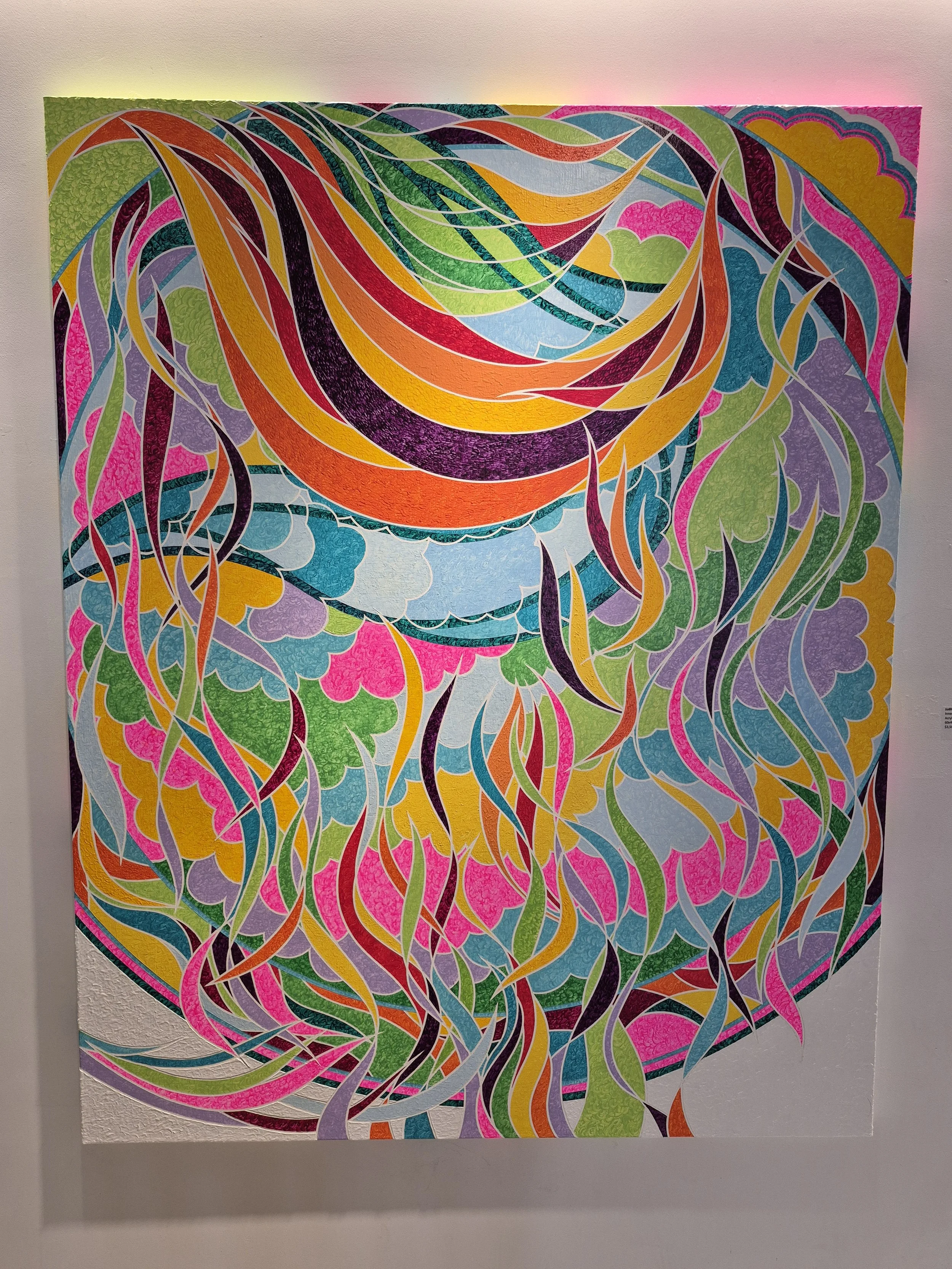
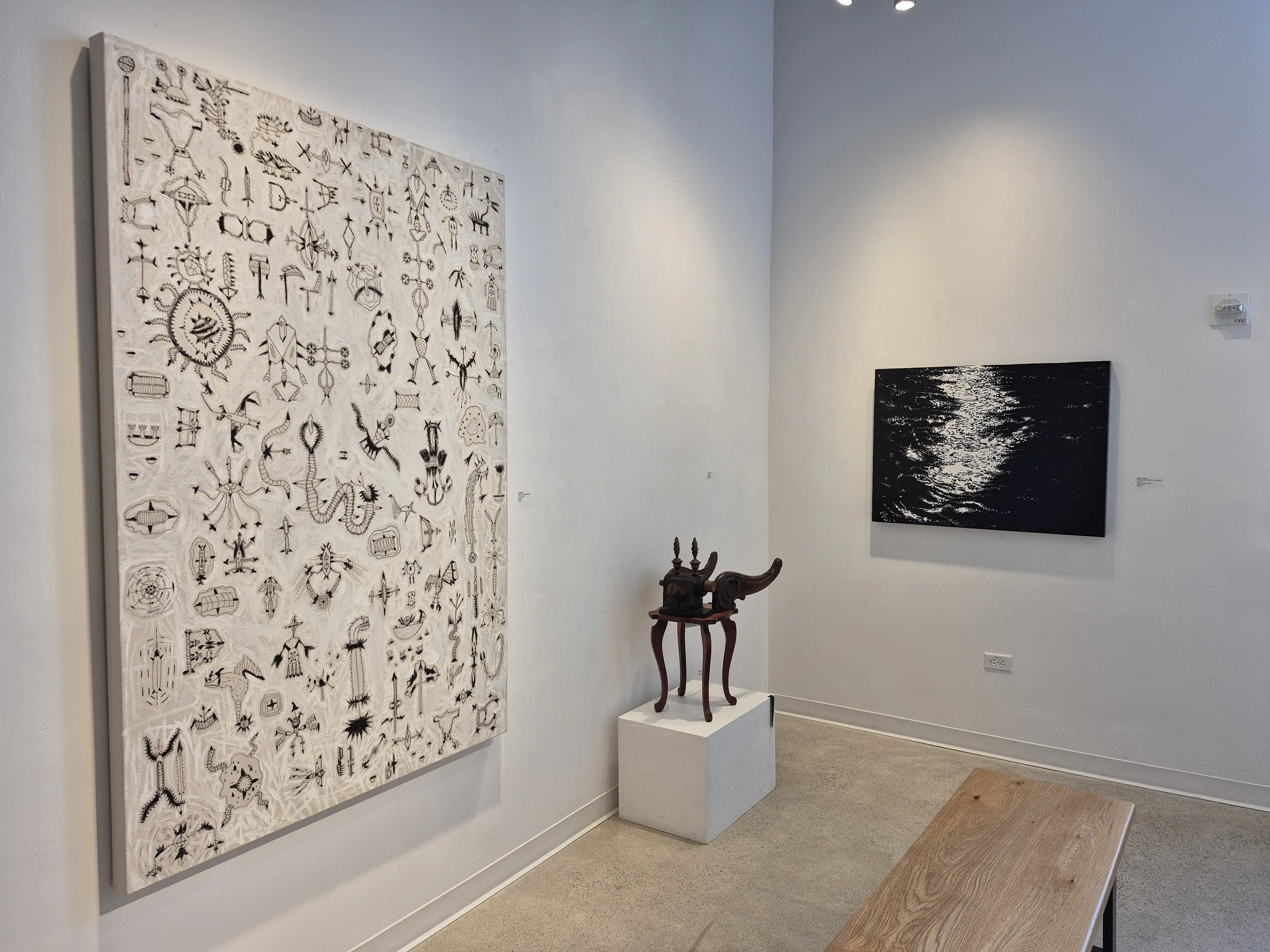
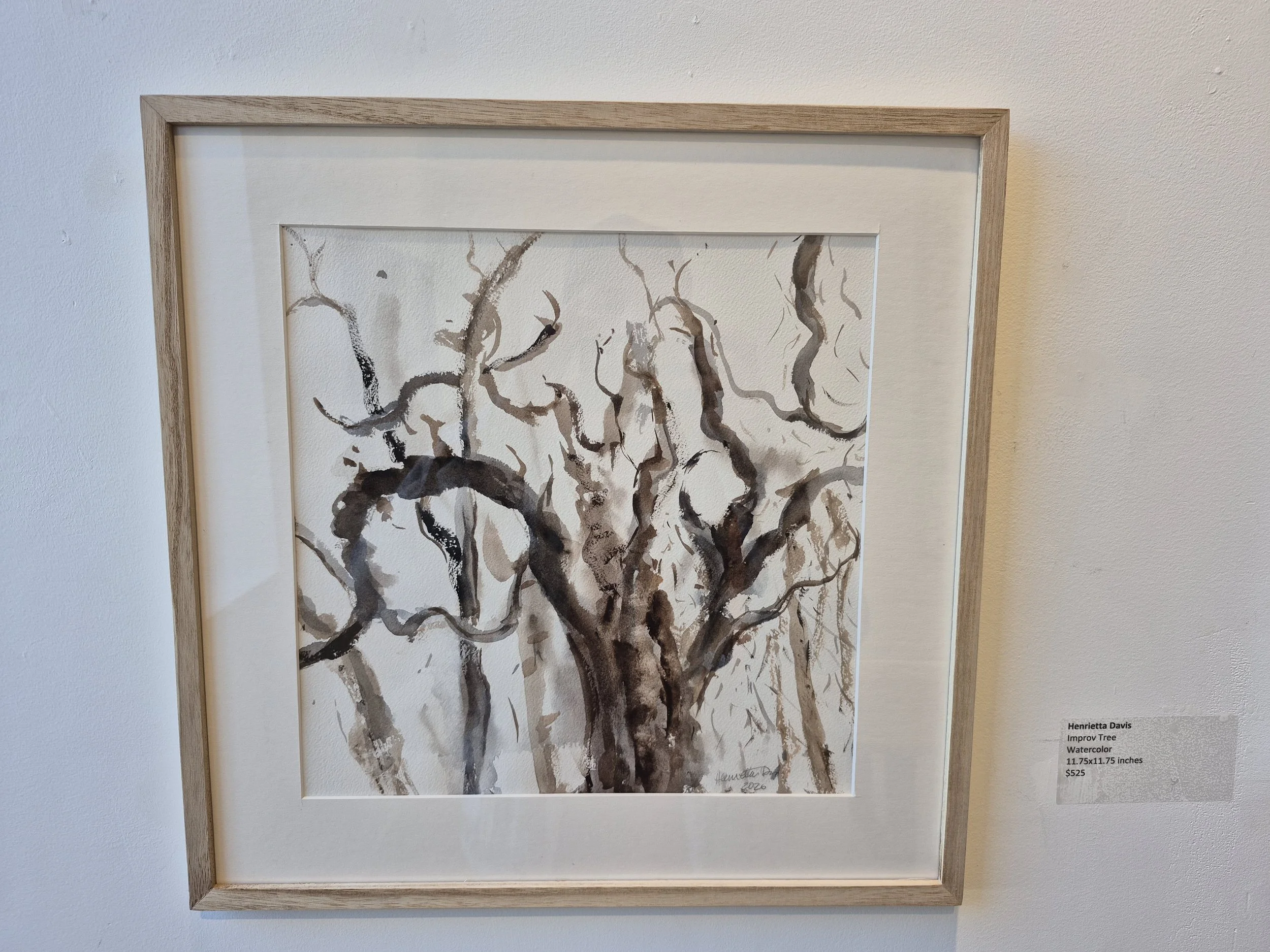
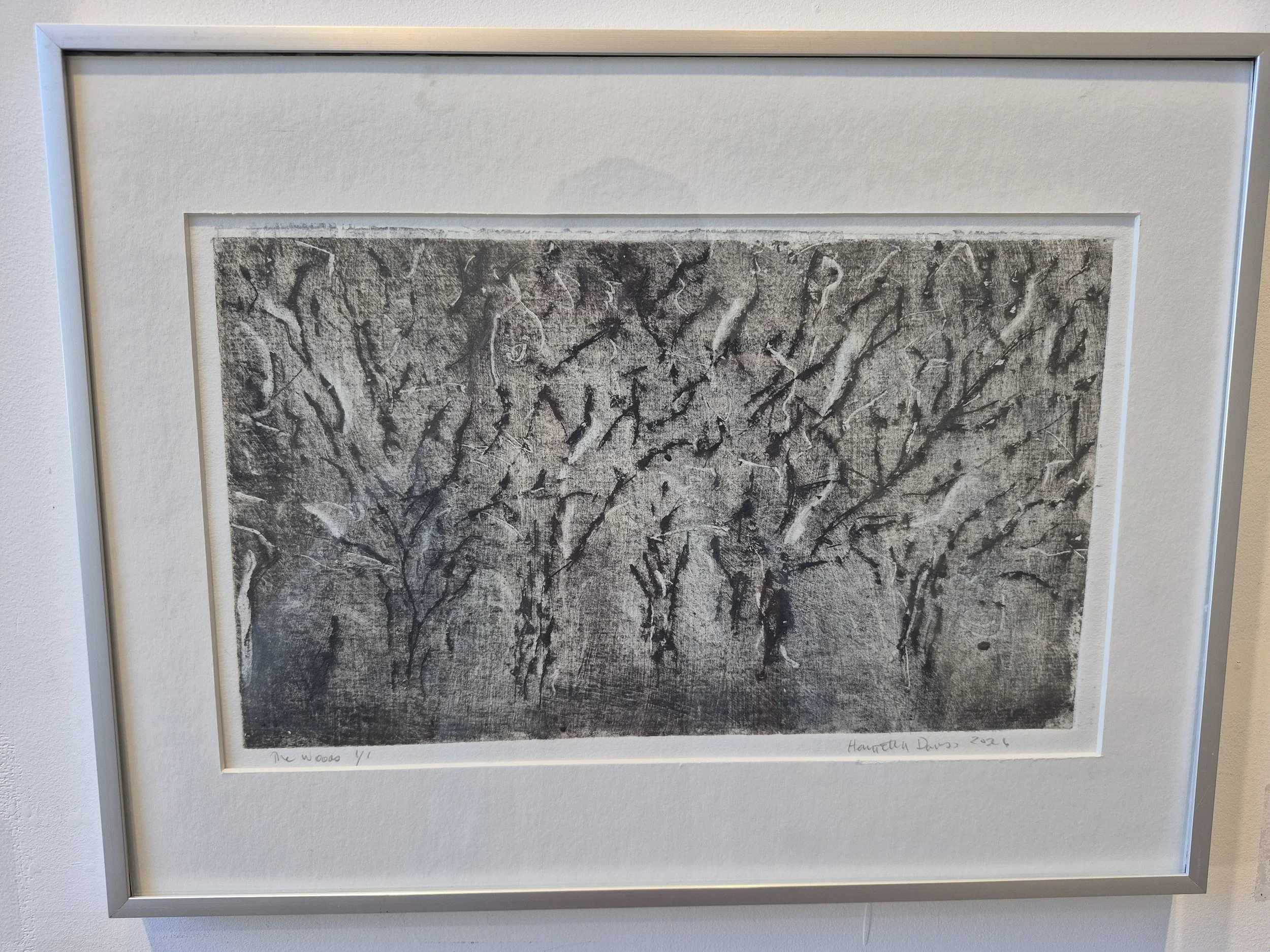
Members Exhibition / Mosesian Center for the Arts / 321 Arsenal St, Watertown / On View Through November 6th, 2026
Image Left: Inner World, Outer World by Judith Ellen Sanders
Images Below: 1. Ideas for Future Mythologies by Jessica Klein / Pegasnout by Keith Tornheim / Shimmering Moonlight, A Quiet Night at the Lake by Sand T. Kalloch
2. Improv Tree by Henrietta Davis
3. The Woods by Henrietta Davis
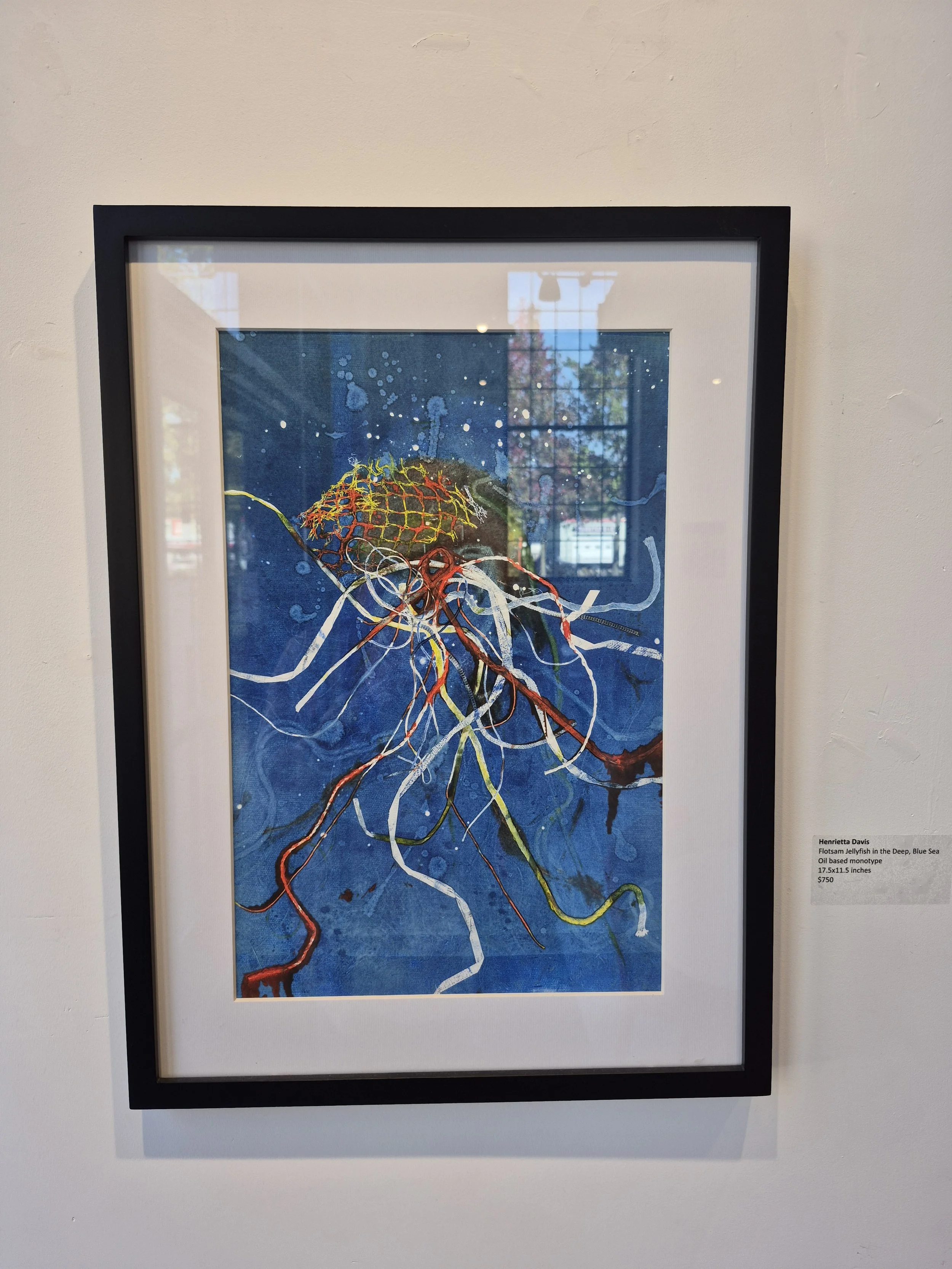
4. Flotsam Jellyfish in the Deep, Blue Sea by Henrietta Davis
Switch!: Laura Chasman and John Christian Anderson / Storefront Art Projects / 83 Spring St, Watertown / On View Through November 21st, 2026
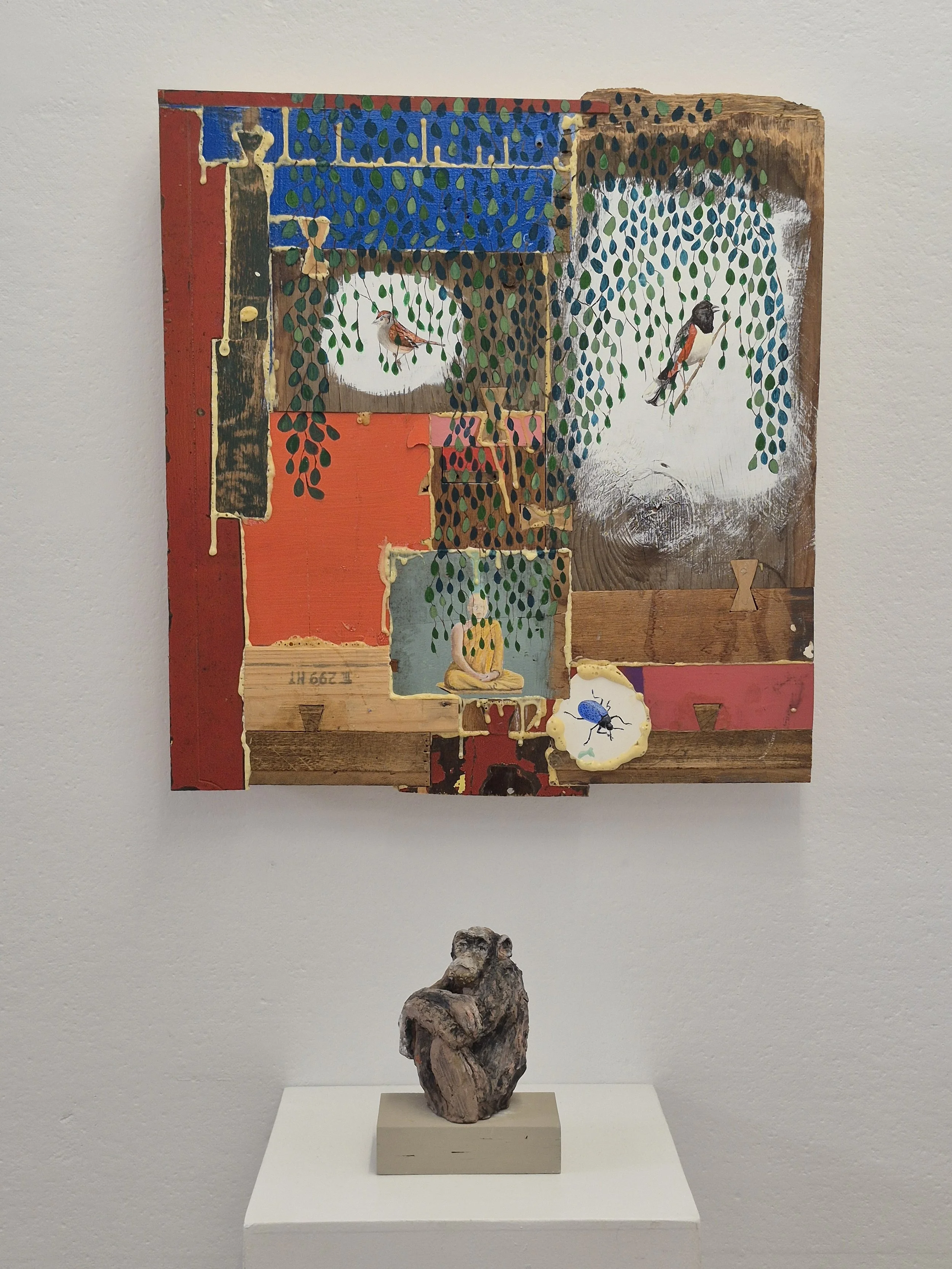
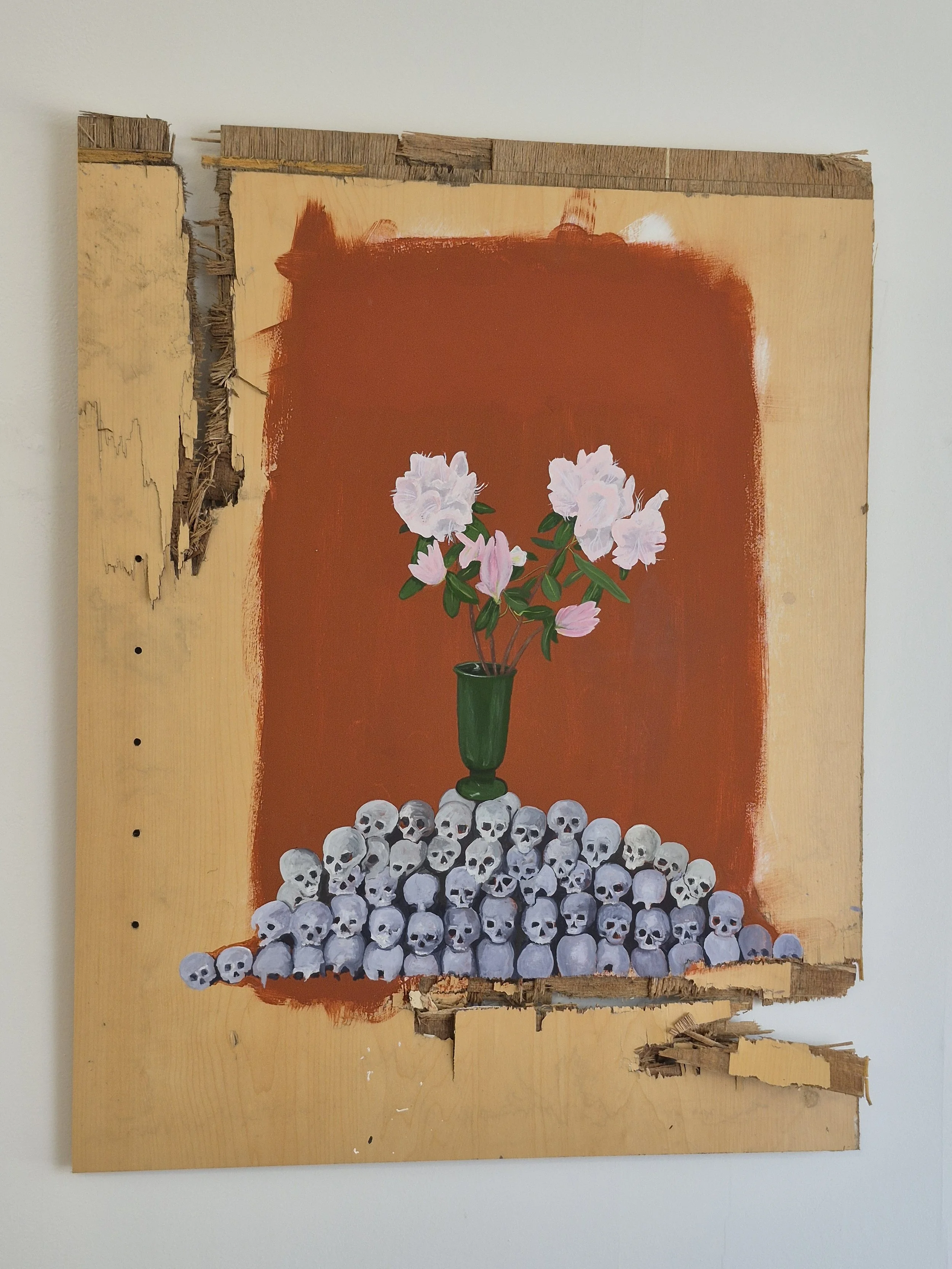
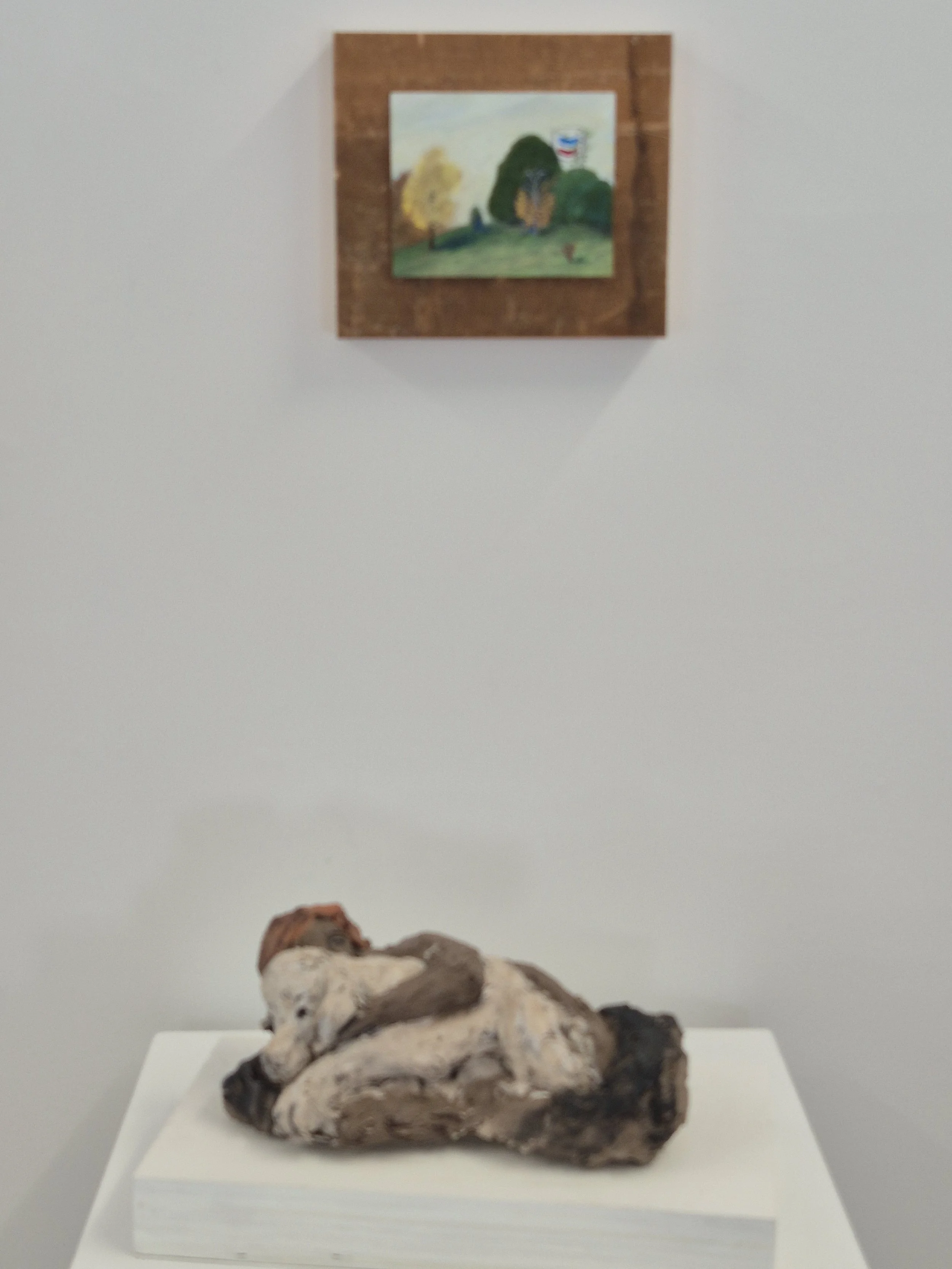
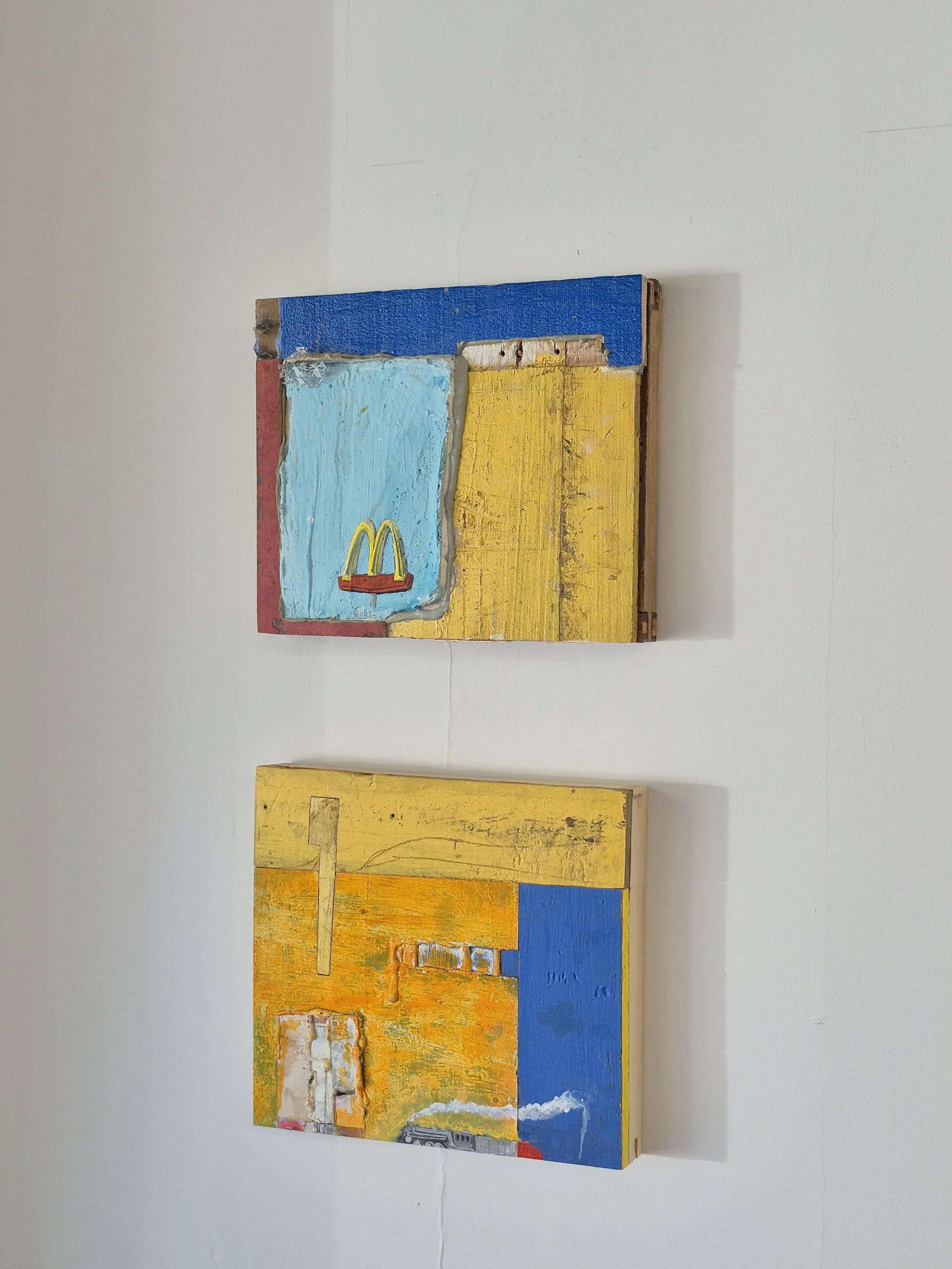
Image Left: (Top) My Sharona by John Anderson (Bottom) Mourning and Melancholy #13 by Laura Chasman
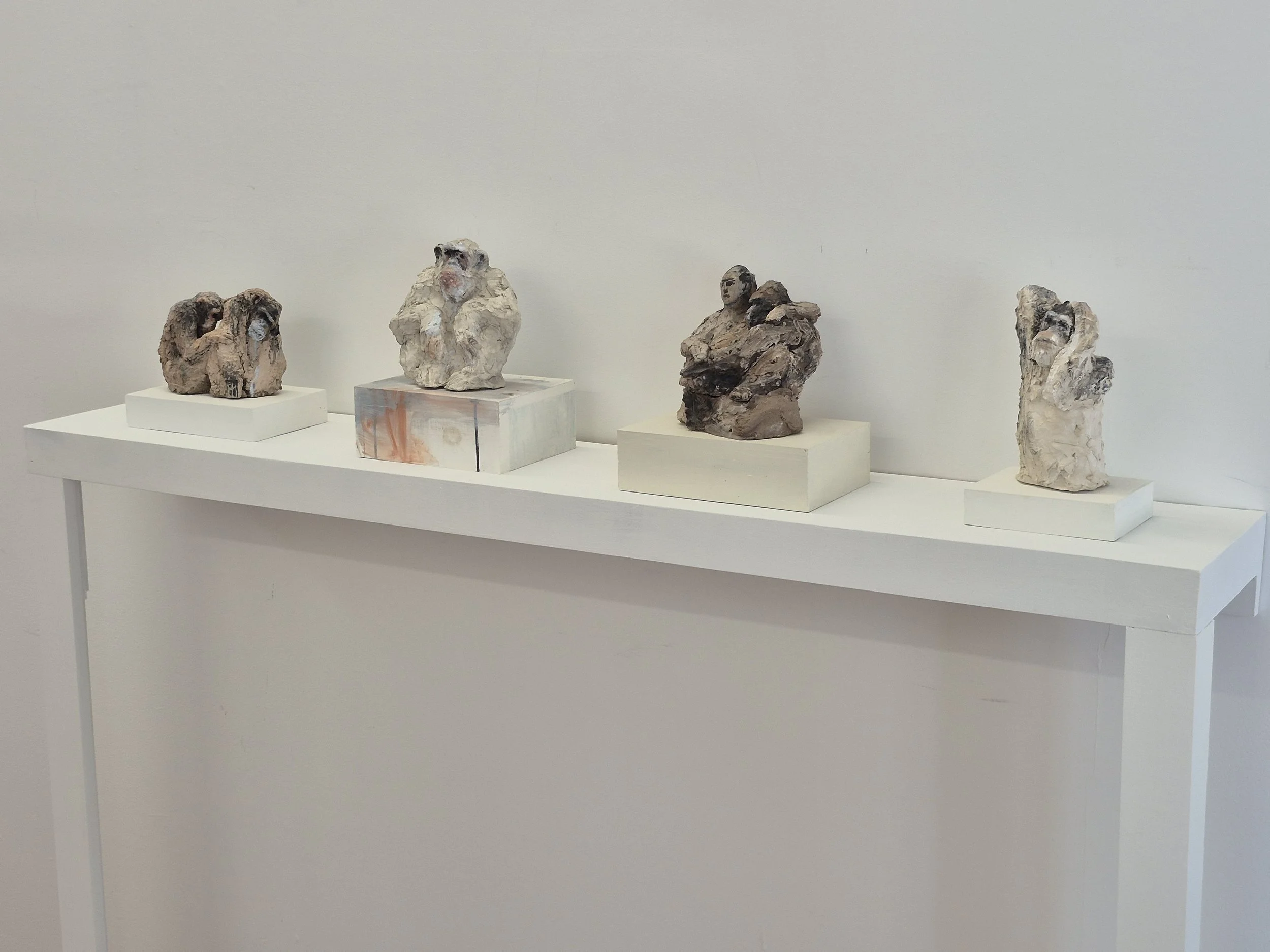
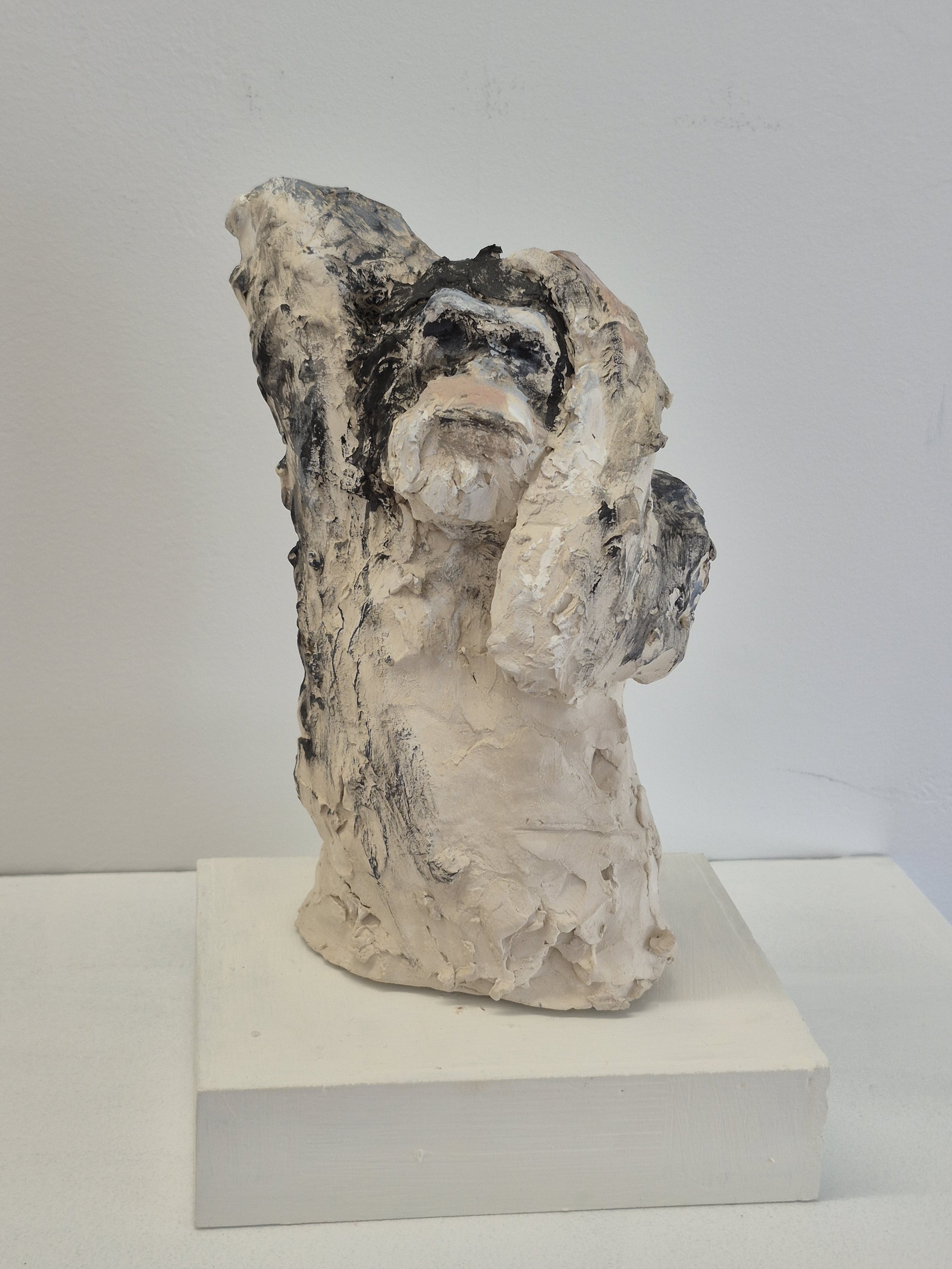
Images Below: 1. Sculpture by Laura Chasman 2. Mourning and Melancholy #17 by Laura Chasman 3. Cycle by John Anderson 4. (Top) Chevron by John Anderson (Bottom) Woman Sleeping With Her Dog by Laura Chasman 5. (Top) MacMondrian (Bottom) Next Stop, Oblivion by John Anderson
Watertown Public Arts and Culture Committee Showcase / Watertown Free Public Library, 2nd Floor, T. Ross Kelly Family Gallery / 123 Main St, Watertown / On View November 1st Through November 30th, 2026
Sign up for the Little Local Conversations email newsletter to know when new episodes are out and keep up on everything Little Local Conversations.
Thanks to podcast promotional partner the Watertown Business Coalition, a nonprofit organization focused on connecting local businesses and strengthening our community. Find out more at watertownbusinesscoalition.com.
Thanks to promotional partner Watertown News, a Watertown-focused online newspaper. Check that out at watertownmanews.com.

This program is supported in part by a grant from the Watertown Cultural Council, a local agency which is supported by the Mass Cultural Council, a state agency.
Transcript
Matt 0:02
Hi there. Welcome to the Little Local Conversations Podcast. I'm your host, Matt Hanna. Every episode I sit down for conversation to discover the people, places, stories, and ideas of Watertown. This episode is a gallery stories episode where I visit a few spaces around the city that have art exhibitions up for people to come see. I stopped by three places for this episode. One quick thing before we jump into the conversations. I'm currently running the second annual Little Local Holiday Giveaway, where if you sign up as a monthly supporter of the podcast, you'll get a gift card or other gift from a great local business. I have over $1,300 worth of gifts to give away, so lots of good stuff. I'll give more details at the end of the episode, or you can pause the episode, head over to LittleLocal Conversations.com slash friend, become a little local friend, then of course come back and listen. All right, let's get into some conversations with artists and curators. As a note, if you want to see images of some of the artwork we're talking about throughout the episode, head to this episode's page on LittleLocal Conversations.com. I'll link to it in the show notes for those of you listening on streaming services as well. Of course, the best way to see them is to go in person. So hopefully this episode gives you a little nudge to go see these shows. All of them are free to visit. The conversations in this episode are ordered by when the exhibit ends. So let's start with the one ending next week, November 6th.
Matt 1:20
Went over to the Mosesian Center for the Arts to speak with Boriana Kantcheva, the director of visual arts there, and a couple of artists with work up currently. I'm standing here today in the Mosesian Center for the Arts, and I've got a few people here to talk to me about the members exhibition they have coming, or that is here already. So, Boriana, do you want to introduce yourself and a little bit about the show?
Boriana 1:43
Yes. Hi, thank you. This is the Members Exhibit, and the Members Exhibit is actually an annual event. It happens every fall, and we've been having this ever since I started working here, which is about five years ago. But prior to that, it was also a very popular exhibit and is about our member artists. This one ends on November 7th. So if you have not seen it, please come and see the exhibit.
Matt 2:11
And what's your position here?
Boriana 2:14
Yes, of course. So I am the visual arts director. I curate the exhibits here, and I also teach and manage the adult classes. So I have a bit of a double role, but it is about adults loving visual arts and participating in classes and exhibits.
Matt 2:32
Yeah. And how many members do you have participating in this show? Do you know the numbers on it?
Boriana 2:37
This particular exhibit, it's about 45 or 50 members.
Matt 2:43
So how do you , how do you put that together? Because that's a lot of different types of art to put together. How do you go about putting that up? How do you think about it?
Boriana 2:51
So this show is a little different than other exhibits because we actually don't have a theme. So what happens is our members apply and they are guaranteed to have at least one piece in the exhibit. Sometimes members have multiple pieces, but like I said, there is no theme to it. So what happens is the work comes in and I look for relationships. Very often, pieces actually explore similar themes like landscape or process-oriented, texture, and color. I try to find these relationships and put the work together in a sense that it's not just about one piece, but multiple pieces that speak to each other and support each other. So that's as a curator, that is my goal to make an exhibit that is comprehensive but also showcases the strength and the beauty of each piece.
Matt 3:45
Yeah. Was there a favorite pairing in this or anything that were you like, oh, I discovered this and this went together and I didn't think so at first?
Boriana 3:53
Or yeah, some of the work because it comes in as digital images. And I start thinking about how the exhibit will be put together long before the work comes. But then the work comes, and I'm very surprised because once you see it in its physical form, things may change and some relationships that I have not anticipated come about. And like, for example, in this smaller alcove gallery.
Matt 4:20
So we're if you walk right in the front doors and to the right, there's a little alcove. Yeah.
Boriana 4:24
A little alcove gallery. What was really interesting is I had this piece by Jessica Klein. It is about mythologies. And then Keith, who is a wonderful found object sculptor, brought this piece and it's based on Pegasus, although he calls it Pegasnout. And immediately these two pieces were in conversation because there's the mythology part of it. You know, they're both creating a very interesting contemporary, but also based in some kind of a mythological past. And these two were really perfect to be next to each other. And then I have another piece by Sand Kalloch, which sort of took that mythological thread, if you will, but also as a bridge piece between these really wonderful landscapes. And this whole room for me had a very subtle, very beautiful, almost narrative quality of the work as you look and you kind of go through the pieces, they tell a story.
Matt 5:26
Ye ah. So for listeners, we're looking at this large, it's uh, is this a?
Boriana 5:30
I t's a painting, yeah.
Matt 5:32
Large canvas and it's got these mythological symbols and creatures. And then you move to this, like you said, found object. It looks like a stool with some like leg rests or armrests that are made to look like the wings of Pegasus, and then you have this ocean scene. Maybe we're going on the Odyssey or something.
Boriana 5:49
Maybe on the Odyssey, yeah, that's a good point.
Matt 5:51
And then we move around the corner to these landscape and natural scenes and such. Is this your work, Henrietta?
Boriana 5:58
And then we have Henrietta's piece.
Boriana 6:00
Two of them right there.
Matt 6:01
We've made our journey over to your piece here, Henrietta. Do you want to first introduce yourself?
Henrietta 6:06
I'm Henrietta Davis and I'm a printmaker and do watercolor painting.
Matt 6:10
And how long have you been a member of the Mosesian, or how long have you known about roughly, you know?
Henrietta 6:14
I think three years, maybe I've been a member. Yeah, and it's a wonderful opportunity for me to both to learn here and also to show my work and to meet a community of people that I wouldn't know otherwise. So that's been a lot of fun to be associated with Mosesian as a member.
Matt 6:30
Yeah. Did you do artwork before you were taking classes here, or was this your first foray?
Henrietta 6:34
No, I had a career in politics until a dozen years ago and still do a little dabble in that a little bit. But this is what I've mostly been working on for the last 10 years or so, learning to be an artist. When I was first turning to a career, I thought my artist friends were having more fun, but I was destined to do other things for a while.
Matt 6:54
Great. So do you want to tell us about you have it looks like you have a couple pieces up here?
Henrietta 6:58
I have two pieces here and one in the other room, also, to my delight. These are, one of the things I'm working on this year is trees. I'm really taken with the message the trees give us in the wild. And, so these are two versions. One's a watercolor. That's actually an invented tree that I just sort of took off on, and it seemed to grow by itself. So I let it. And I did that this summer. This I did here at Mosesian, learning to work in dry point. That's what I've heard, it's called dry point. Learning to make a plate out of chipboard, chipboard plate, carved into that with an X-acto knife and tweezers, because that's of course a regular tool that you use in doing this. And it was wonderful because I had never worked in that medium before. And I was in Borianna's class, and Borianna is first of all a wonderful patient teacher and inspiring because of her own work. So yeah, I made three images like this, and I'm working on some other trees now and some other different kinds of things like that upstairs this very day as we're talking.
Matt 8:00
Yes, yes, you came down in your full garb. So why trees? Why do the trees speak to you?
Henrietta 8:05
Well, you know, I've been thinking a lot about that. Why are they speaking to me so much? And I think they have a certain presence and almost human feeling to when you go into the forest and you see all these many people who are talking to you. I mean, they're trees, but I'd feel that way about Saguaro cactuses also. And that's really a community of people that you're enveloped by when you're in the forest or in the desert with a Saguaro cactus. I haven't done them yet, but we'll see.
Matt 8:34
It's on your list.
Henrietta 8:35
Yeah, absolutely.
Matt 8:37
And are there any stories in the creation of this? I know you said the dry point was something new, but is there any interesting story in the creation of it that, I don't know, really stuck out as a moment for you?
Henrietta 8:46
More the my other piece, the jellyfish piece.
Matt 8:49
Okay, yeah. Where is that?
Henrietta 8:51
Want to go look with your microphone at my jellyfish?
Matt 8:53
Yes, let's go.
Henrietta 8:54
All the way over here.
Matt 8:56
So we're walking past the front doors, back into the M-bar, the cafe area here.
Henrietta 9:03
Over here in the corner is my one of my dozen or so jellyfishes that I've done out of plastic material that you find in the ocean. It was a lot of fun working on this, and I'm working on a piece like this upstairs now, looking up at the canopy of trees, only using things like plastic and aluminum foil to create the image. It's a lot of fun. I'm a person who likes to make soup, and somehow doing this kind of work in printmaking is a lot like making soup.
Matt 9:29
And it's not a tree, but you still have the branches and tangles going in different directions. So is that like a visual theme that you like?
Henrietta 9:37
Perhaps, it's not intentional. I mean, I think that that's one of the things that maybe if I'd been an artist longer, I might know what I was intending to do, but I now do recognize what I like when I got it rather than know what it's going to be from the get-go. And I think that that is perfectly legitimate, I heard, to recognize what comes out good rather than what you intended.
Matt 9:57
It's a journey, right?
Henrietta 9:59
Say one more thing about the the jellyfish, which is that I did the work with all this plastic debris on a plate and created this image of jellyfish and multiple other images. And someone else looked at it and said, this reminds me about the plastic in the oceans. And I thought, how did I miss that? And so now I recognize that the work also has the message about plastic in the oceans and renamed it thus as flotsam jellyfish in the deep blue sea. But it was a chance to do something with a message besides just appreciating the dynamism of the different lines and the strings and flotsam that I put into the image.
Matt 10:36
Yeah. Great. Well, thank you for showing me. All right, we got another artist here, so why don't we mosey on over to your piece? Back into the lobby. And yours is straight back before the black box, right? So why don't you introduce yourself, give your name and a little bit about yourself, then we'll talk about your piece.
Judith 10:54
All right. My name is Judith Ellen Sanders, and I'm a new member of the Mosesian. It's a wonderful place here. And how I found out about being a member is that I had a piece in the Art and Healing show. And I'm always looking for little postcards and stuff to see what's going on around the area. And there was something about the Watertown Children's Theater. And they just this summer started a new next stage program for kids who have aged out of Watertown Children's Theater but loved it so much. So my son got involved and had the chance to be in the summer production. And then I found out how I could become a member. So it really took me through all the wonderful things about Mosesian. And it is a wonderful place. And I'll have to check out the classes as well.
Matt 11:43
And are you a longtime artist or?
Judith 11:45
I'm a longtime artist. No need to tell you for how long.
Matt 11:49
Sure.
Judith 11:50
Very long. Painting all my life, really. But at one point I went to graduate school for science. Why? I just wanted to. I was already an artist and took biochemistry and learned about all these beautiful biochemical pathways that are going on within us every second. And there are many of them, and they all interweave with each other. And it's visually beautiful how these reactions occur. Things leaving the cell, entering the cell. And so as soon as I started taking those classes, I turned my little second bedroom office into a studio. So it took me an extra year to graduate. It took me four years instead of three to get my degree because I painted throughout. I had to be painting about what I was learning. So that has changed my work. So it's a very flowy. I love to combine color and form, but I love bright color as you can see. I mean, each painting is very different, but always dedicated to a feeling of synergy and renewal and uplifting feeling, but also hopefully lots of color and form, but not too overwhelming. That's always my concern that it you don't feel that it's too much.
Matt 13:08
Yeah. And so that we're looking at your piece right now, inner world, outworld. It's 60 by 48. So this is another large one. Do you usually work in large canvases? That gives you more space to make the complexity, right? Without getting overwhelming.
Judith 13:21
I love working large. I mean, sometimes I work a little smaller than this, like even 30 by 30 or 40 by 40. And I work on paper, but I do love working large, and I sometimes work in panels so it can be even bigger. But I've made pieces that are 90 by 120 in three panels so they'll fit in the car. Because that's always the concern. And yes, but I do love working very large and with lots of color.
Matt 13:49
Yeah. So how would you describe your piece for a listener here?
Judith 13:52
I mean, to try to break down there is a circle around with colors within the circle. And then what I wanted to do was have a sense of growth, which I always like. So it's basically one's inner world, which is rich and dimensioned, and then helps take you to the outer world. So just to show a sense of freedom and always but I love the word possibility, sense of possibility.
Matt 14:20
Yeah. And was there anything in the particular process of making this that was a standout moment for you?
Judith 14:26
Well, this painting has gone through many iterations. There's an artist, Jay DeFeo, I don't know if you know that name. She made this painting, the rose, and it was many, many layers. It was completely different each time she added to it. But this was yellow at one point, all yellow, but this had lots of forms in it underneath here that I thought, oh, it's too much, too overwhelming. So sometimes it's hard to figure out what looks best. So I have to make layers of change, and it's very hard with acrylic paint because acrylic paint can't be removed.
Matt 14:59
So it's only an additive process.
Judith 15:01
It cannot be, like oil paint. You can take turpentine, take it off. This cannot. Once it's there, it's there. So underneath here, there's along the bottom and I'm pointing to. But then I said, no, I have to change it. So it kind of grew, it kind of metamorphosized to what it is now.
Matt 15:18
Yeah, and it kind of gives that space of moving from a little more blankness to more complexity towards the top. Yeah.
Judith 15:26
It could have been called Roots and Wings. That could have been the other title. But I liked Inner World and Outer World, but now I'll probably make a roots and wings painting also.
Matt 15:35
Was there anything else you wanted to share about this this piece or your experience with the Mosesian Center or anything else?
Judith 15:44
Well the Mosesian is just such a dimensioned place. Like I say, I'll check out the classes, but the opening is always a wonderful thing because all these artists come together, all excited to be there, all excited to see everyone else's work. And it's such a beautiful space, upstairs and downstairs for art. Really it's a community. So I'm just very happy to be part of it.
Matt 16:05
Well, thank you for coming today and sharing. But I don't know, is there anything you want to wrap up with, Boriana, about the show for people to come in to see?
Boriana 16:13
Definitely do come. There's a couple of more weeks left to see the exhibit. And if you have never been here, we're easy to get to. You could either drive and park in a free garage or take the bus. And this is truly a community place for everyone, artists, visual artists, performing artists. So hopefully you'll make your way to us.
Matt 16:35
Great. I'll thank you all again for being here. Thank you.
Boriana 16:39
Well, thank you.
Matt 16:40
Yeah, of course.
Matt 16:42
Again, the Members Exhibition is on display at the Mosesian Center for the Arts through November 6th. The MCA is at 321 Arsenal Street in Watertown. You can visit the gallery Tuesday through Friday, noon to 6 p.m. You can also take a look around if they're open for a show as well. But I'll be there the last day of the show is up next Friday, November 6th, hosting the November Creative Chats event at noon. You can come by then to be a part of that and see the show.
Matt 17:06
All right, next up, I stopped by Storefront Art Projects to speak with Ellen Wineberg about the exhibition she has up through November 21st.
Ellen 17:14
Welcome to Storefront Art Projects. We have a couple show this month into November 21st. Laura Chasman and John Anderson are a married couple who've been in the art world in Boston for many, many years. They're now living outside of Northampton. John was a sculptor at Boston Sculptors Gallery, and he taught for many years at Framingham State, taught sculpture. He's now painting. Laura was a painter who showed at Kayafas Gallery and Pepper Gallery and other places. I think she's got a piece in the National Gallery as well. She was a painter and she's now doing sculpture. So the show is called Switch, and that's at Storefront Art Projects, 83 Spring Street in Watertown, Mass.
Matt 17:52
Yeah, so tell me a little bit about the show. So how did this show come about? Did you reach out to them? Did they reach out to you?
Ellen 17:58
They've been friends for a long time, and they have a studio outside their house in Florence, which I've visited. It's a garage that's turned into an upstairs-downstairs studio. And the last time I visited John downstairs doing this new thing where he'd taken his sculptures apart and was using them with paintings in them or paintings on refuse from his older pieces or supplies that have been piling up in his studio. And he was putting these assemblages together with painting. And then upstairs, Laura, instead of painting, was doing these sculptures mostly of extremely emotive apes. There are apes in mourning. There are apes that look like the Pieta. There are apes that are pairs and hugging. They're totally human, humanized work. And they're small. They're like seven or eight inches tall and they're heavy. She uses unfired and self-hardening clay. But they're just as beautiful as her paintings were, and they're done with the same hand that she painted with these little strokes, but they're totally three-dimensional and real. And she's gone from two-dimensional and flat to three-dimensional. And it's remarkable that somebody can make that switch.
Matt 19:08
Yeah. So two questions there. One is why did they start switching? And then two, well, let me start with that. Do you know why they started switching?
Ellen 19:15
I know why Laura started switching. I think John was an evolution of just looking at the stuff in his studio and wanting to paint. His last sculpture show, he was in the show about birds at Concord Art while he was still at Boston Sculptors. And he had a piece there, oval-shaped frames, maybe 20 of them, hung like a bunch of grapes. And in each frame was a painting of a bird that I think was going or already was extinct. So he's been involved in environmental issues and painting nature. So the birds were beautifully painted. And I think he had a good time doing that. That's the first time I remember seeing painting in his work. And I think he just wanted to keep up with that. And he had the supplies and he had the other stuff. But when you look at his work, you see that there's a painting in each one of these assemblages. And the assemblages work as a frame, but not like a traditional frame. They're just like a box or like part of the piece or a collage added onto the piece. And everything is very colorful. And he's as good a painter as he is a sculptor. Laura took a class. They go to Mexico every winter for a few weeks, and she took a class while she was down there in clay, having never done it before, and got really into the act of sculpting. And she just got so enthralled with it. She just got some stuff, got some stuff in her studio and started working. And she doesn't make just one of anything. So there are, I think, 13 pieces in this show. She took home another five that didn't fit. She had to curate the shelving composition in a way that they're sort of dancing and looking and being with each other on these little plinths on top of a shelf that they built into the gallery. Working with these two, they're seasoned professionals, and I didn't have to do a whole lot. Working with these two was great because they brought the material to make the shelves. They sawed the legs off in the gallery. They put them into the wall in the gallery with special screws and special tools, and I didn't have to deal with it much. And the way Laura curated her pieces, we just watched. We just watched as she walked around and made this drama that happens among and between the pieces, the apes.
Matt 21:19
Yeah. So maybe we could talk about. Do you have like a favorite of or one that you think is particularly interesting of each of theirs that we could talk about specifically?
Ellen 21:27
We can talk about John's titles, they are really cool. There's a combination back here that I think is worth this combination right here, painting of John's called My Sharona. I don't know why he called it that, but I just have the song in my head. Anyway, so that's placed above a pedestal that has an ape on it. There's a Buddha in John's painting, and under the Buddha is this ape. And there's something similar in the position that the ape is sitting and the Buddha is sitting. John's painting is very colorful with birds and leaves and a beetle and reds. And blues and gloppy glue holding the pieces together. And this ape is sitting underneath it, kind of looking like he's reacting to the painting, but also it's just so human. Could be bored, he could be disgusted. He's expressing some human emotion under the peaceful Buddha and the beetle and the birds that are obscured and the smooshes on the paint. It's just a wonderful combination that makes no sense, but you get it.
Matt 22:27
Yeah, it's an interesting juxtaposition. And yeah, and describing his work here, like it's this like assemblage of different pieces of wood that are not perfectly cut. Some stick out from the edges, and then the wood glue that's holding them together is pouring out and is part of the art. Then the paintings on top of that wood. So it's almost got this woody, earthy feel to it with the nature painting. So it's interesting that interplay between that too.
Ellen 22:51
And as sloppy as it is with the glue pouring out, he's got this very specific bowtie butterfly what do they call it?
Matt 22:59
Join ts.
Ellen 23:00
Connectors, joints. Yeah. And there's a number of them, which is very fine, fine woodworking. And then he's got the glops of glue just, you know, casually draped over them, dripped over them. But I love this combination. There's one, there's a couplet, a duet here in the window where he's got a piece above, he's used the same colors and also pieces of wood. It's an assemblage, red, blue, and yellow, and some oranges, primary colors. And they're very shockingly modern. And at the same time, there's one that's red, blue, and yellow with a McDonald's arches sign that he's painted to look very dimensional. It looks like a plastic thing that sticks off, but that's just how he's painted it in the shading. And the title of that is McMondrian. So it's like a Mondrian painting of geometrics, but it's got the McDonald's in it. And right below it, with the same color scheme, except with some orange. The title of this one is Next Stop Oblivion. And you don't know why until you look at the very bottom and you see there's a freight train and some smoke coming out of the front, and it's just sort of going off the edge of the painting, or could crash into that orange shape next to it. But it's just a wonderful title, these two pieces. He's got another one over here on an old piece of ripped up wood that he saw on the street for a few days before he decided he needed it. It's just a ripped up piece of plywood or veneer. And he hasn't done much to cover the rips or the state he found it in. But in the very middle, he painted a beautiful vase with flowers in it resting on a pile of, I don't know, 25, 30, 40 skulls that he did in gray. So it's sort of the life cycle, and the name of that is called cycle. And you get it, it's like a memento mori of the live flowers and the dead people and the dead piece of wood that he painted it on, but it comes to life. There's a gold tone of the wood behind the red background where he's painted the flowers, and there's something lively about it. And it's not sad or melancholy, it's kind of cheery. But those skulls, you wonder.
Matt 25:10
Mixed messaging.
Ellen 25:11
Mixed messages. I also love this other little painting of his, a charming, sort of folky landscape with a chevron sign behind the trees. And it's like, yeah, this is how man has interrupted nature continually. And under that, there's a sculpture that Laura did of a woman, woman sleeping with her dog. And there's just something cool and funky and gestural about that comfort together with the chevron piece. And this was funny because she insisted on the angle that this is resting on the pedestal. And people come in and want to straighten it. And she says, Nope, this is the way it is. This is the way it goes.
Matt 25:48
Yeah.
Matt 25:49
And how about Laura's work? So, I mean, you already explained that they're kind of these emotive, mostly apes here, but what else can you tell us about them?
Ellen 25:56
She has a background in psychology and social work, and she's very tied into the feelings of the world. And these apes are expressing the feelings of the world. And you get it. You don't have to know, you don't have to know how she did it or what you're looking at. You just look at these faces that are not human, but you just look at them and you know what feeling she's expressing. That she's able to put in.
Matt 26:20
This one looks like it's taking a shower to me.
Ellen 26:22
I know. And the name of that one, that's interesting. That's called Morning and Melancholy. Three or four of them have that title, Morning and Melancholy. The reason it looks like it's taking a shower is because it looks wet. And the reason it looks wet is because of her white brush strokes on top of the pale gray. It's not shiny, it's not glazed. It's just how she used the paint. But you know, this one, what's this guy called?
Matt 26:44
Morning and Melancholy number one.
Ellen 26:46
Okay, he's number one. Yeah. And he's just sort of resigned. But look at his fingers, look at his feet. I mean, you can see how she worked the clay. She sort of roughs in the body but finishes the faces. They're just, I don't know, they're remarkable. How she, with just a few strokes and a hole and some ears, she's got a face of a very sad morning ape.
Matt 27:08
So how did they? So here was my other question from earlier. Did they ask each other about questions like, hey, how do you paint? Or how do you do sculptures? Or were they very much like, don't tell me anything about your process? I mean, I'm sure they've gleaned stuff from them over the years.
Ellen 27:21
They've gleaned over the years. I mean, like Laura knew John would build these shelves for her. Laura knew John would build the bases for her. John has watched Laura paint for 35 or 40 years and knows how she does that. I think they're probably influenced, and their house is filled with their work and other people's work, but it's still very sparse. So they're looking at each other's work all the time. But they leave each other to it. You know, they're both very individual the way they work. And I understand how John works. He's a workman. He starts and he does it and he works his way through, and then he gets surprised. He works the way I do, so I get it. You know, he gets a surprise by the end. But I don't know how much planning goes in. I think he's putting things together as he's doing them. And with Laura, she's totally lost in the process when she's working. So she's like becoming one with whatever it is she's making. That's how you feel her energy in the work, because that's what she put into it.
Matt 28:17
Cool. Well, why don't we just give the info where can people come to find this? When is it open from? All that stuff.
Ellen 28:24
The galleries open Thursdays and Saturdays, one to four, or by appointment through the website Storefront Art Projects. And the show is up until November 21st.
Matt 28:34
Great. Well, thank you for having me in to look around and chat.
Ellen 28:38
And goodbye, listeners. It's always fun to talk to you, Matt. You ask good questions.
Matt 28:43
Switch is on display at Storefront Art Projects through November 21st. The gallery is at 83 Spring Street in Watertown. And if you want to hear a little more about Ellen's curation process, you can go a couple episodes back in the podcast to hear the last Creative Chats episode, where I spoke more deeply with Ellen about her curatorial process and her career. Next, I spoke with Watertown's senior planner for public arts and culture, Liz Helfer, about an exhibition that will be up at the Watertown Free Public Library for the entire month of November.
Matt 29:12
I'm sitting here today at actually the new Parker Building, offices for public arts and culture, and lots of other things here. And I'm sitting here with Liz Helfer, Public Arts and Culture Planner for the City of Watertown. And we're going to talk about an exhibition that she is putting together for the Public Arts and Culture Committee at the Watertown Free Public Library for the month of November. So tell me about the exhibition.
Liz 29:35
Well, we're looking at now the past five years of work that the Public Arts and Culture Committee has done. The committee was founded or established in 2021, at the very end of 2021. And so starting in 2022, hit the ground running with projects like Edible Watertown, the community sculpture walk, and has since branched out into some other things. And so we want to just do a showcase of everything that's happened in part because five years in, we're actually doing a public arts master plan update, which is a document that established the committee. And now that we've implemented most of that plan, we're moving forward into the next five to 10 years of planning for what do we want for public arts and culture. So we're taking a look back. This is a great opportunity to showcase what we've done.
Matt 30:15
Yeah. Well, first of all, do you want to give the 30 second, What is the Public Arts and Culture Committee?
Liz 30:20
The Public Arts and Culture Committee is a public nine-member committee for the city of Watertown that is tasked with implementing the public arts master plan, which includes commissioning public art and developing public art policy. It's really fun. I think I'm very lucky to work with the Public Arts and Culture Committee to make this work happen. And the Public Arts and Culture Committee frequently works with the Watertown Cultural Council and the Watertown Cultural District, two other arms of public arts in Watertown that also exist.
Matt 30:49
So for people listening, I am on the Public Arts and Culture Committee. So I know about some of these things, but I want to make sure our listeners know about it too. So take me through the different parts that you're going to be highlighting, like the different things the committee has done over the years.
Liz 31:01
So let's start with Edible Watertown. So that was the inaugural project of Public Arts and Culture Committee. In 2022, Sally Young said, I saw this amazing project in Europe where we celebrated local ecology and plant life and local species. It culminates with things around food. Everyone got really excited about this idea. And it started off with an edible plants coloring book where we had 10 visual artists work with species that are local to Watertown that are wildly growing, but thought to be edible most of the time.
Matt 31:32
Disclaimer, disclaimers.
Liz 31:34
Please do not eat the plants without first talking to foraging experts. That being said, it was a great way to debunk some myths, also for artists to explore what's happening with these plants in our local ecology. And it was a great kicking off point for the rest of the project, which went on to include visual artists working with writers to explore what's happening with local plants, and then a project called Expert Pairings, which paired artists with scientists to work on projects about local ecology, which culminated in four public art installations. As part of this, we also did a garden internship program with the local schools where middle and high school students actually we built a new garden at the middle school, a shed, the students put it together. They did botanical drawing, they learned about the plant life, they learned how to take care of plants. Fabulous program, which we're hoping to see reincarnated at some point. And it's with the sustainability team in the planning office now. So hopefully we'll get to work on that going forward. And then we're actually in the final iteration of this project. So from 2021, the idea started in 2021, but it got kicked off in 2022 and culminating in 2027 is the final iteration of Edible Watertown, which is an Edible Watertown cookbook. We have eight different recipes by seven different restaurants in Watertown that are going into a cookbook. And actually, while this show is up, the call will be out for artists to illustrate that cookbook. And we're very excited to be showcasing that cookbook and the food that's created with it this spring.
Matt 33:07
Yeah. That's been one of the flagship projects of the Public Arts and Culture Committee.
Liz 33:10
The biggest one overall. Yeah.
Liz 33:13
The next project that the committee picked up was the community sculpture walk. And I will say this was something that was very close to my heart as a sculptor, but it was that we have places to cite sculpture. And one of the best places to do that right off the bat was along the community path, which extends from almost all the way to the river from Howard Street all the way up to now Mount Auburn Street, kind of cutting through the parking lot there behind the CVS and library. Our sculptures actually range from sites between the library and Howard Street. So four sculptures are selected every year. Artists gets a stipend for the two-year loan of their sculpture. They install it. We get to enjoy it for two years. And we put out this call every year. So there's always eight sculptures up, but every year four are switching out. It is a lot of fun to see the different variety of sculpture. And that's the point is that we get to see a variety of contemporary sculpture and different techniques used to make sculpture. We get to meet the artists, we get to learn more about their work. We're gonna keep this going for the foreseeable future.
Matt 34:12
Was there a favorite sculpture that for you when you saw it in person versus, you know, when we get these, we just see in the pictures, obviously, and then artists talked about it, but when we got it in the place was a favorite one, like, oh, this really clicks.
Liz 34:23
I'm not allowed to pick favorite s, Matt. I will say there's one that's been incredibly popular since it went in this past spring, and this is Roe Osborne's Respite Straight Out. It is a functional bench, but a very sculptural bench. And I really love the use of materials. And I think that people love the location of it, right? At the corner of Moxley Field where the temporary high school has been. I see people just leaning and lounging on it all the time.
Matt 34:48
Awesome. Okay, what do we have next? What's the next chunk we have here?
Liz 34:51
A few other projects that have come up along the way. River of Light, which I hope people are familiar with. It is a celebration of light and winter. It is a collaboration amongst the Public Arts and Culture Committee, the Watertown Cultural Council, and the Mosesian Center for the Arts. It is a parade of lanterns. It happens at the Mosesian. This year it'll be on January 16th from 5 to 7 p.m. Every fall, we have many, many lantern making workshops. These are paper lanterns made with lightweight wood and for all ages, and make large, gigantic, kinetic lanterns and also small, fun, compact lanterns. And then we get to showcase them. And this year we're really pleased to be working with the city of Newton, who is also doing some lantern making workshops with some of our artists, because they have another event happening, their winter fest, I believe it's called, the week after our lantern parade. That way you have twice the opportunity to showcase your lanterns this year. So we're really pleased to have that one coming back around year after year now. And then kind of an offshoot of this. Last year we got to work with a class of students, undergraduate students from Mass College of Art and Design. Elaine Buckholtz's class, she teaches light art, the use of light to create art. And so they did a project at Sullivan Park. It was just a two-week pop-up. They had a really fun event where they had created objects that interact with light. It was in the evening, it was dark. They had suspended this fabric and different elements between the trees there. Then you interacted with it. It was called The Light Between. It was really fun. We're very excited to have them back actually tomorrow. They'll start installing along the community path. More of a pop-up. It's going to be real quick, like one week. This is a wonderful opportunity for us to collaborate with undergraduate students who may not know what it takes to put something in the outdoors in a public setting. And they have to learn it pretty quick. And they also get to learn how to work large, how to have great impact. And we get to really interact with younger students and help maybe shape their careers going forward, which is really exciting.
Matt 36:52
Yeah. I should tell everyone too, as we're going through this. So you'll be able to find out information about each of these in the exhibition. Like there's going to be a big display with pictures from all these events and information on them.
Liz 37:02
So there's a lot, a lot going on, many years of work. And we're not even touching all the back end stuff the committee has done. Setting up a framework for creating public art and for policy and all the rest of it, which is a lot of work that the committee has done.
Liz 37:18
And so another more kind of pop-up project is called a pleasant landscape. This was commissioning artists to submit artwork for banners that are along the old Sterritt Lumber site to kind of screen that site. That was a lot of fun because artists got to consider the theme of a pleasant landscape because they're near the river, they're near the Pleasant Street corridor, just removed, as a way to beautify and bring interest to that site while it's under redevelopment. I encourage people to go check it out. And then in 2023, we collaborated with the Department of Public Works to create some artistically designed bike racks to go in our public parks. There's two different designs that were commissioned. One is called Snail by the artist Nat Reed. It is at the Filipello spray pad. And then there are four Mobius bike racks by Daniela Procupez, very talented designer. You will find one along the community path, one in Saltonstall Park, and two that will be installed very shortly. We're really pleased with how this turned out. Really fun to collaborate with the Department of Public Works directly on this one. I'm going to talk about three more things that have happened. In 2025, we commemorated 100 years of Arshile Gorky. This was a massive collaboration between, I should say, among the Armenian Museum of America, the Gorky Foundation, Public Arts and Culture Committee, Mount Auburn Cemetery is involved, the Watertown Community Foundation, Historical Society of Watertown, the Mosesian Center for the Arts, Watertown Cultural Council funded part of it. And we had several private funders. And this was all because Arshile Gorky is a very notable figure, in American modern art, abstract expressionist. He's an Armenian immigrant who fled the Armenian genocide and really recreated himself. And his first step in creating himself as this master artist was coming to Watertown. And so we're celebrating the fact that he was here a hundred years ago and started his journey here becoming an artist. The Public Arts and Culture Committee commissioned its largest mural to date. It is called Passage by Brandon Gaia Marshall, who put together a beautiful proposal that merged themes of Gorky's work with themes of Armenian heritage, with themes of loss and transition. It's really wonderful. He worked with two high school assistants who he trained in mural art, which they're so gung-ho to keep going on it. It's wonderful. And we're just really pleased to bring this to life. And then it was also in partnership with the Mass Department of Conservation and Recreation, who had to give permission for us to paint along the Watertown Cambridge Greenway. All in all, a really wonderful project and a wonderful way to commemorate a very notable figure in Watertown's past.
Matt 39:41
Yeah, and some people still don't know where that one is, but it's when they find it, it's like, oh, that's awesome.
Liz 39:46
So it's under Grove Street. So Grove Street goes over the Watertown Cambridge Greenway. It's right next to Well, Watertown Exploratory Labs, which was the old Tufts building. People might know it with the tower on the very east end of Watertown. So if you're going under Grove Street along the Watertown Cambridge Greenway, that's exactly where it is. It's hard to miss once you do find it. It's big and colorful. And then a project that we just wrapped up at the end of this summer is Water Tunes. And this one's really fun. So we decided what they wanted to do was collect people's favorite songs and put together a Watertown playlist. In addition to that, we're going to have an event to celebrate the songs that people find special. And so we asked people to submit their favorite songs, why it was important to them, and a little bit of information about them. So we have a sense of like who's submitting these songs. And what we ended up doing is as part of the summer concert series, which I managed through my office and not directly through the committee, we got a DJ. We curated a list of songs that would fit within a two-hour block because we got way more songs that would fit within two hours. So we picked some of the more upbeat ones, but people can go and read through the entire playlist, read why it's meaningful, they can listen to it on YouTube. And we had just had a really fun party, everybody dancing. Puppeteers Cooperative came out like they do for one of our concerts every year, which are these like giant, more costume-like puppets, but also puppet puppets for people to wear and run around with. And it was a party, and everyone had a great time. Hopefully we'll get to do this again.
Matt 41:11
Shout out to Barbara.
Liz 41:12
Barbara Epstein making it happen.
Matt 41:14
Matt 41:14
I'll mention one more thing. So in the last round of the community sculpture walk, last year, we got a submission from C.R. Gray, very talented granite sculptor, who wanted to do a customized granite bench that had the forms of books as part of the seating elements. The committee really loved this proposal, but it didn't really fit within the two-year loan stipulation of the community sculpture walk. It didn't make sense to do something customized and then after two years to rip it out and send it on its way. So instead, we said, let's see if there's a place we can put this where it's along the community path. So it's within the purview of this project, but it's a little bit more adjacent, tangential to it. Talked to the library. We're very excited to announce that we will have this wonderful commemorative bench to commemorate One Book, One Water town in the many years that it's gone on. And so throughout the month of November, people are invited to select their favorite One Book titles. From that list, we will engrave the books that will go onto this bench and will be installed behind the library in spring 2027. So it's a wonderful collaboration, also. Very cool. Is that it?
Liz 42:18
I think that's it. These were the major, major projects of the past five years, but there are many things still in the works. And so be prepared for lots more.
Matt 42:28
Yeah. So you'll be able to go to the library on the second floor, T. Ross Kelly Family Gallery, and you'll be able to see information on all these also. You can see information on all these projects online too. But you know, there's supposed to be gallery stories. We're supposed to go to the gallery.
Liz 42:42
See the images. Enjoy it.
Matt 42:44
It'll be cool to walk through and see all the projects.
Liz 42:47
Also with this exhibit, there will be maps of public art locations throughout Watertown, not just the project of the Public Arts and Culture Committee. So people are invited to go and explore. We do have a story map online where we have all of this where you can learn much more. And there's an interactive map. So if as you're traveling around, you're able to see these places in real time and locate yourself in the city. There will also be some information about the public arts master plan update process, which as I said is kind of the impetus for this exhibition. Five years in, we're planning for five more years plus. The public input period is over, but if you do have ideas, please email me. I want to know. But we're in the drafting phase of this. And so we've got a lot of input from the public over the past five months so far, and plan to have a draft before city council in early 2027 for approval.
Matt 43:33
Great. Is there anything else you wanted to say about the exhibition
Liz 43:36
Well, many thanks to the library for hosting us again and to Jamie Kallestad for managing the gallery and the Public Arts and Culture Committee for the wonderful work they do. As always, I'm very honored to assist.
Matt 43:48
Great. Well, thank you for sitting down to share about this. Hope people go check that out. Thank you.
Liz 43:53
Thank you.
Matt 43:54
The Public Arts and Culture Committee exhibition will be on the second floor of the Watertown Free Public Library, the T. Ross Kelly Family Gallery, November 1st through November 30th. Go check that out and learn about lots of the public art that's gone on in Watertown these past five
Matt 44:08
years. All right, so that's it for this Gallery Stories episode. Again, head on over to LittleLocalConversations.com for all the shows' information and to get a little peek at some of the artwork mentioned. I'll have that webpage linked in the show notes here if you're on streaming services. If you want to hear more episodes of the podcast, you can also head over to LittleLocalConversations.com. There you can find all the episodes, information on upcoming live podcast events, such as the Creative Chats on November 6th, and sign up for my weekly email newsletter. You can also take part in the Little Local Holiday Giveaway. It's running now through November 25th, or until I run out of gifts. At the website, you can click on the Become a Little Local Friend button in the menu. Anyone who signs up at $5 a month to support the podcast, or current friends who up their support by $5 will win a great local prize. You sign up, you get a prize. It's not a raffle, you just get one. I've got guests from Actors Shakespeare Project, Arsenal Yards', Buttermilk and Bourbon, Condesa, Medium Rare , and Tori Jiro, Artemis Yoga, Branch Line, Coffee Plus 254, Caldwell's Miscellaneous Fancy Goods, Campolongo Cookie Company, Cass School of Floral Design, Eastern Clothing, Fastachi, Gore Place, the Historical Society of Watertown, the Mosesian Center for the Arts, and Mount Auburn Cemetery. The first prize will be given out on November 13th. I'll be randomly selecting a Friend to get two tickets to Mount Auburn Cemetery's Solstice. The rest of the prizes will be given out the day after Thanksgiving. Alright, and I want to give a few shout outs here to wrap things up. I want to give a thank you to the Watertown Cultural Council who have given me a grant this year to help support the podcast. So I want to give them the appropriate credit, which is, this program is supported in part by a grant from the Watertown Cultural Council, a local agency, which is supported by the Mass Cultural Council, a state agency. You can find out more about them at WatertownCulturalCouncil.org and MassCulturalCouncil.org. And a couple more shout outs to promotional partners. First, the Watertown Business Coalition. Their motto is Community Is Our Business. Find out more about them and their events at WatertownBusinessCoalition.com. And lastly, Watertown News, which is a Watertown focused online newspaper. It's a great place to keep up to date with everything going on in the city. Check that out at WatertownMANews.com. So that's it. Un til next time, take care .
