Gallery Stories, April 2026: Art and Healing
In this Gallery Stories episode, discover the stories behind the Art and Healing exhibition up at the Mosesian Center for the Arts here in Watertown. Take a listen then go visit the gallery and experience the art yourself!
Released April 14th, 2026
(Click here to listen on streaming apps) (Full transcript below)
Art and Healing / Mosesian Center for the Arts / 321 Arsenal St, Watertown / On View Through May 1st (In Partnership With New Art Center)
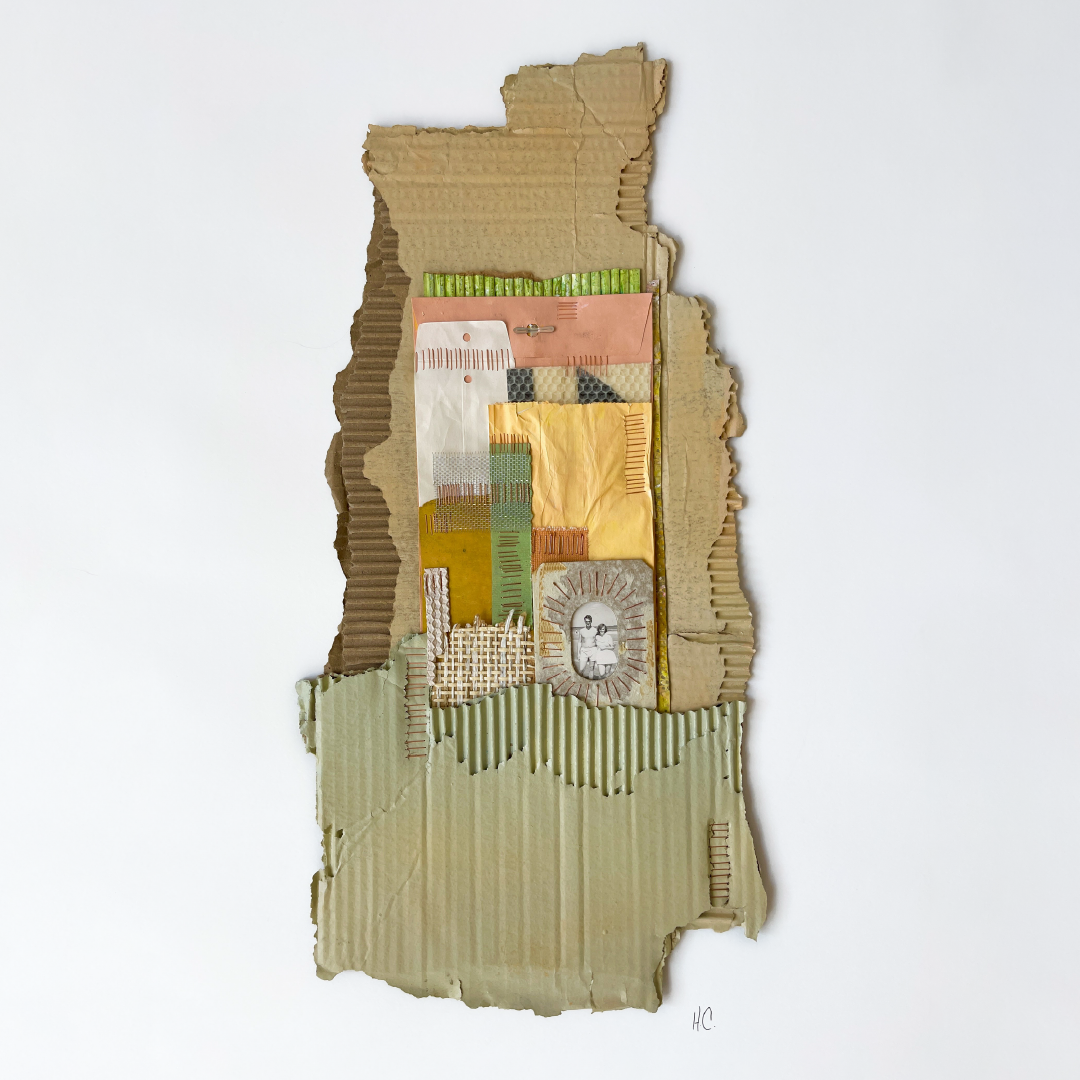
Pictured: Fragments No. 12 by Heather Carroll
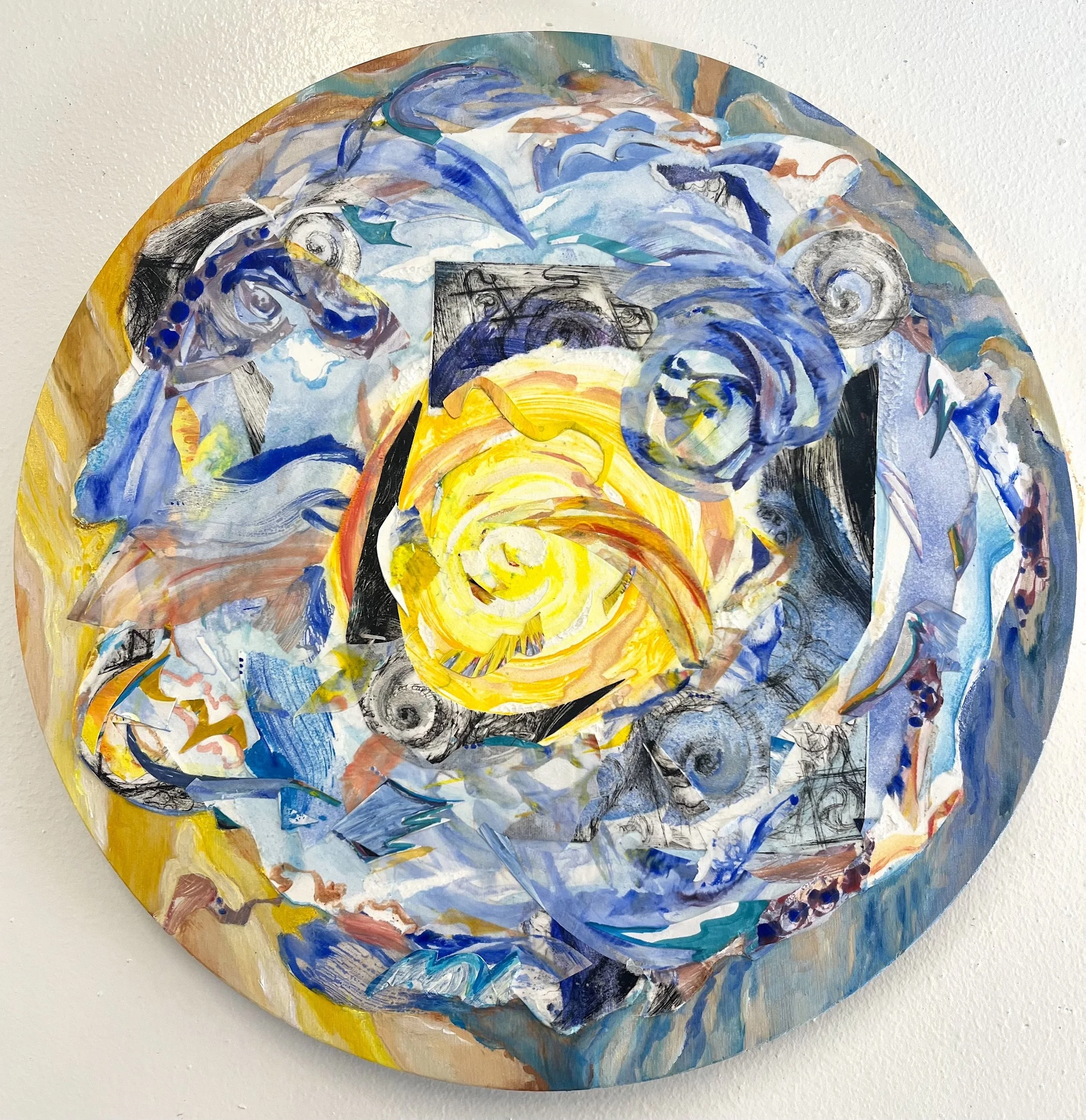
Insight Mandala by Erin Palazzolo Loparo
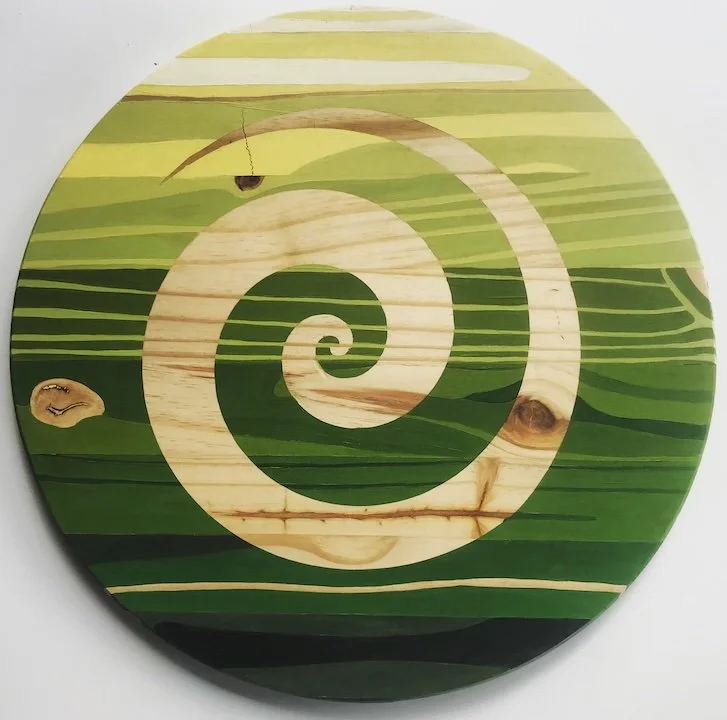
Spring by Tova Speter
Sign up for the Little Local Conversations email newsletter to know when new episodes are out and keep up on everything Little Local Conversations.
Thanks to podcast promotional partner the Watertown Business Coalition, a nonprofit organization focused on connecting local businesses and strengthening our community. Check them out at watertownbusinesscoalition.com.
Thanks to promotional partner Watertown News, a Watertown-focused online newspaper. Check them out at watertownmanews.com.

This program is supported in part by a grant from the Watertown Cultural Council, a local agency which is supported by the Mass Cultural Council, a state agency.
Transcript
Matt 0:07
Hi there. Welcome to the Little Local Conversations Podcast. I'm your host, Matt Hanna. Every episode, I sit down for a conversation to discover the people, places, stories, and ideas of Watertown. Today I have a Gallery Stories episode for you. And this one is about the Art and Healing exhibition that is going on at the Mosesian Center for the Arts in Watertown and is up on display through May 1st. And I had a conversation with Matt Jatkola from the Mosesian Center and a couple of the artists who are on display and also have been doing some talks related to the exhibition at the intersection of Art and Healing, Erin Palazzolo Loparo and Tova Speter. So let's get into it.
Matt 0:46
So I'm here today at the Mosesian Center for the Arts. We're standing right here in the lobby looking at the new show that's up called Art and Healing. Want to take it away, explain it a little bit for us, Matt?
Matt Jatkola 0:55
Yeah, Matt Jatkola. I'm the Associate Executive Director here, and we're actually talking to you the morning after our opening reception. We had a great turnout. We have a lot of good energy around the show. It'll be open through May 1st. I think we have.
Matt 1:10
Not as many as last time.
Matt Jatkola 1:12
It's not as dense as the last show we had. We had over a hundred pieces, I think, for that one. This is not as dense, but as you walk around and experience the work, there is actually heaviness to a lot of it. So I like that there's some space to take some of it in. There's some heavier things, but there's a lot of joy too. That's what the Art and Healing show is about. It's people processing these feelings of grief, feelings of joy, feelings of you name it, they're here visually. So yeah, we're really happy with this show.
Matt 1:40
Yeah. And how did this theme come up for you guys?
Matt Jatkola 1:43
A lot of our themes will tend towards different media, media specific, something more in that realm and having this be, it's a little broader, but it's also super specific in terms of, for lack of a better term, the feeling of it. It's very feeling-based, which I think was exciting for us. We also had some built-in things that we knew were gonna work or that came together, which Erin and Tova have been part of. Like we're partnering with New Art Center, did a talk over at New Art Center that they both spoke at a few weeks ago. And they're part of this exhibition as exhibiting artists, and they're part of this community. So there's definitely a lot of synergy there. Yeah, people have really been taking their time with the work and experiencing it, and it's been really cool to see people be affected by it.
Matt 2:30
Yeah. Is there any particular pieces, besides the artists we have here, that you want to point out as we walk around?
Matt Jatkola 2:36
There are. There are plenty. I actually came prepared with some notes today, Matt. So like I'm saying, like some of the work is really pretty personal. And as I was looking through it, I was like, I feel like I should just read some of little bits of the artist's statements rather than try to reframe it in my own words. So there are definitely a few we could walk around and chat about. I'll start here. So when you walk in the door, you'll see Erin's piece on your right, and then right next to it is Heather Carroll. I'm kind of jumping in with a heavy one, but I'm just gonna read a little bit of her description. My recent work emerges from a space where grief, memory, and rebirth converge. Since the passing of my grandfather in 2019 and the loss of my first baby in 2023, I've carried these profound absences with me at home and in my art. The birth of my daughter in 2024 marked not only a return to life, but a rebirth of my creative voice. And then she goes on to say that this duality lives in her materials. Remnants from the past are pieced together with newly found objects, aged textiles meet fresh paint, salvaged hardware beside delicate thread. So there are these mixed media pieces that have a lot of personal weight for her. We chose them as one of our featured images that we're sharing as we promote the show. And I just think it's telling of the kind of depth of the work, the intention behind the work.
Matt 3:55
Yeah. Interesting. Yeah, when I look at it, the ripped cardboard is the first thing that pops out. And it's something that, you know, you see in your everyday life when you go to put something in recycling, but when it's put in this way with the pictures of these people from her life and all these other materials and color schemes, it's yeah, it's evocative. It is nice that it has a little space around it too, that is framed with the white background so you can.
Matt Jatkola 4:16
Yeah, absolutely.
Matt 4:17
I'm not an artist, but my initial, I like to give my initial vibes for people listening too. Yeah. What else you got?
Matt Jatkola 4:25
Over here we, on a lighter note, we'll go over here. So if you were to walk in the Mosesian Center for the Arts, you go to the right, you'll see those pieces that we were just talking about on your right. And then if you go take a full right into the small gallery, there are a bunch of great sculptural pieces over here that I wanted to just shout out. One of them is by Keith Tornheim, who is a frequent exhibiting artist and he's a very punny guy. He loves puns. So this is a piece that has knitted elements. It's an old table. He takes these antiques and repurposes them often into like vaguely human form. This one is a table that he has a basket on the top of it and some knitting needles and some yarn, and it's called Knitting Myself Together. He always challenges us to guess what his pun is when he comes in here. So that's kind of a lighthearted one. They're not all super heavy, but oh, I should turn this one on too.
Matt 5:19
Oh, it's lighted.
Matt Jatkola 5:20
This is a lamp by Adi Kitov called Nesting. She's an immigrant here in the US, and it's all about finding her roots through her family growing up, through her children growing up. And she's been inspired by that to create this piece. It's made of these wood tree trunks that she found, I think, from around her house or from the local woods. And she's built this fun glowing sculpture called Nesting.
Matt 5:46
Anyone know what spalted maple means?
Matt Jatkola 5:49
Spalted, I don't know.
Matt 5:51
Yeah. It's made with maple, but I don't know what the process of spalting maple means. Yeah. We've done the research on spalted?
Tova 5:58
So spalted maple is characterized by these streaks. It's caused by early stage fungal decay. And so the fungi softens the wood and it requires additional stabilization. So that Nesting is surrounded by wood that is softened in some way as well.
Matt Jatkola 6:16
That's great. That gives it a whole other depth of meaning there. That's very cool.
Matt 6:20
Thank you, researcher. Let's see. Since we're near your work, Erin, let's pass the mic on to you. First, do you want to just introduce yourself, a little bit of who you are and what you do?
Erin 6:30
Well, hello, everyone. I'm Erin Palazzolo Loparo. I do join Boriana Kantcheva here to do printmaking often, but I also am co-founder and program leader of the Artist Therapy Program at the New Art Center in Newton. I am thrilled for this collaboration between our two venues and of course Tova's integration into everything.
Matt 6:57
Yeah. So let's talk about your piece first, and then we can talk about how that ties in with this theme and how it ties into everything that you do.
Erin 7:05
So as you come in the front door adjacent to Heather Carroll's powerful works, you'll find my Insight Mandala, which is a small round, about 14 inches round, mixed media, collaged mandala on wood panel that's circular. So a mandala is a sacred circle. I have created mandalas for over 20 years. I created them privately as a therapeutic act coming out of my training and experience in graduate school in art therapy many years ago, and as a kind of emotional mirror for the different stages of my life. So I have many, many of them. However, in the last several years, I begun to take them public and they have begun to become this necessary communication with the outside world that I'm able to take what grows within me from the center outward and to bring that into conversation with others.
Erin 8:06
So what we're looking at in terms of this Insight Mandala, the palette is a lot of creams and yellows and ochres and ultramarine blues and sky blues and sort of a full range of blues and yellows and oranges. I begin from the center outward in creating my mandalas. All my mandalas are spontaneous. I don't sketch, I don't plan anything out. That speaks to my therapeutic process of needing to constantly improvise, be surprised, and discover meaning as I create. And so this eye emerged out of the center, and it's in some ways a physical eye, but it also is like a capital I, an I for the self that then is holding in its orbit any number of smaller eyes or mandalas, as well as maybe the flow of water and light. For me, it speaks a lot to my need to express how I hold together the various people and fragments of my life, particularly my family life as a wife, as a mother to three children, as an artist, as a daughter, as a friend, and the need to ground myself and hold all these people and experiences in orbit around me, in connection to me. There are many mixed media elements, including some embedded etchings and various painted papers and acrylic, and I speak the language of collage.
Matt 9:46
Yeah. A couple questions. First one, what is a definition of a mandala? Because this is not traditionally what I think of as a mandala, but obviously there must be a broader definition of that than what my non-art brain knows.
Erin 9:57
No, I think it's a spot-on question because we're very familiar with adult coloring books, which are a tool for relaxation or mindfulness, right? And you'll see perhaps intricate patterns, you'll see very symmetrical designs within a circle that people are invited to color, just sort of what's been popularized. And that can absolutely be a tool for relaxation. I think, and Tova will speak to this as well, you can approach mandalas in many ways. And so my process is spontaneous, is not about following any prescripted lines or forms, that as an artist, I'm fortunate enough where I don't need that kind of scaffolding, although it benefits some people. So you have to do what works for you. For me, I like going in with a blank mind and beginning in the center and anchoring myself and letting through lines, shapes, colors, letting images emerge. The circle forms itself in conversation with me. There's a lot of back and forth dialogue in my mandala making. So when I finish, it's kind of like, oh, I just like, oh, I can breathe again and feel like myself again and feel whole again, and to create within the safety of the circle is nurturing and is cathartic.
Matt 11:20
And is there any story in the creation of this piece where you overcame a challenge where you felt the healing process in a particular part of it?
Erin 11:29
I think you know, just referencing to what I kind of spoke to earlier, it's really taking the bits and pieces of my life, literally cut out as different forms and shapes and lines and being able to synthesize them, being able to bring them together. And just as a mother, as a mother artist, I am so busy. And I'm sure anyone who's listening, you may be very busy in your own life or in your family life or with those you care about, and you can feel stretched apart. And so the mandala is a way I pull myself together, but in a freeing way, not in a like, I must take control and pull myself together. That's not gonna help me.
Matt 12:17
Yeah. And anything you want to add on about how this, mandalas are used in your own practice of art therapy for others and just your art therapy practice?
Erin 12:27
No, I appreciate that question, Matt. So with our artist therapy program at the New Art Center, we have groups for socialized therapeutic art making for grades 4 through 12. And you can find more information at the newartscenter.org to make that plug. But at times we do create mandalas. We can use different materials, watercolor pencils, watercolor mosaic tile. It's really based on the needs of the participants. We have made a large group one in the past. So, yes, mandalas can take many forms, and they're for everyone. I really am a big believer. They're for everyone, all ages, not just children, not just adults.
Erin: 13:10
And we have, thank you, Tova. We do have here a wonderful takeaway flyer that Tova and I generated that provides valuable mental health resources, information. It's right on the front desk. You can come in, pick up a sheet. You'll have resources at your fingertips to support your own mental health and creative endeavors. And on one side is a mandala, a three-ring mandala. And there's a prompt that we can walk you through in just very simple language, a meditative act that you can self-actualize in a short amount of time. Thank you, Tova. And this is also Tova's idea to bring a takeaway flyer into the community. And so please come by and really take in the exhibit for yourself.
Matt 13:55
Any other, before I move on to Tova, anything else you want to direct people about to go check out?
Erin 13:59
I mean, certainly, as I mentioned, the New Art Center, newartcenter.org. You'll find our expressive artist therapy program offerings for fall, winter, and spring terms. My Instagram is at Loparo Erin L-O-P-A-R-O-E-R-I-N. And I have links to other resources through that. But I also should mention one more thing. I am a practicing artist. I work out of Andem Art Studios in Brookline. A few of us artists here are exhibiting from Andem Art Studios.
Matt 14:32
Nice. Thank you.
Erin 14:33
And then I want to direct you to Tova.
Matt 14:35
Yeah. Now we're going to move down the line just a little bit on the same wall. I'm going to talk with our next artist who is here. And so do you want to introduce yourself, Tova?
Tova 14:44
Yes, I am Tova Speter, and I am a community artist and art therapist based in Gorse Mill Studios in Needham. And I just really have this deep belief that engaging in art making is inherently therapeutic based on my background as an art therapist and my own practice of art making as well. And so I engage as a practicing painter and installation artist, and I do a lot of community work, specifically engaging community and collaborative projects to give the opportunity to other people to experience a little taste of the power of art making as well.
Matt 15:22
So tell me a little bit about your piece that you have here today.
Tova 15:26
This is Spring. It is an acrylic painting on scrap wood. All of the work that I do in my own practice is painted on found wood or scrap wood. So it's part sustainability, trying to save these pieces from landfill. I source my materials on the side of the road in dumpsters, construction sites, carpenter excess. As I rescue them, I transform them into works of art worthy of having a second look. And so every line I paint is actually a line that is naturally in the wood. I'm just choosing which ones to pull out and really trying to draw attention to the natural beauty that we can find around us that is often overlooked. And it's a little bit of a metaphor, not only the beauty that we can find around us, but also trying to remind people of the beauty they can find within themselves that is often overlooked. And so this piece is part of a series that I did that was specifically focused on the seasons. Clearly, this one is about spring. It has a duality, though, of not only being spring the season, but spring, like the little metal spiral object.
Matt 16:39
For those listening, this is another circle piece and it's got a spiral in the middle and it shades from a yellow to a darker green. So that's why it gives those spring feels.
Tova 16:48
Yes. And so with the spring and the spiral and spirals feature in my community work in different ways and in other things, but it's this idea of we might feel stuck coming around in circles sometimes. But a spiral and a spring in particular, if we view it three-dimensionally, you might come back around, but you're not in the same exact space. There's a dimensionality where you actually are from a different perspective. And so trying to remind people of that, where like if you feel like, oh, everything is just going around in circles, actually, with every moment we are changing ourselves. And so we hopefully can experience maybe the same thing, but from a new way.
Matt 17:26
Yeah. So you would also consider this a mandala?
Tova 17:30
So yeah, a mandala just means, it's Sanskrit, it just means sacred circles. So really any art that's made within a circle, one can describe as a mandala if they choose to ascribe it that meaning. There's been a lot of research actually in the field of art therapy that creating art in a circle has additional therapeutic benefit for helping with emotional regulation and just feeling better. And so one takeaway for listeners is if you're ever feeling stressed, draw a circle on your paper and draw in that instead of on the square, you know, or rectangular. I don't fully understand all of the neuroscience behind it myself, even as an art therapist, but there has been a lot of research that shows that there are benefits to doing that.
Matt 18:12
Yeah. So tell me a little bit about your art therapy practice.
Tova 18:15
I am an art therapist and licensed mental health counselor. I have a private practice mainly focused on working with adolescents and young adults and utilizing art making in the therapeutic process. It looks differently with different people. Sometimes it's just a little bit of a distraction and way to engage while we're talking, makes it a little bit easier. Sometimes it's very specifically prompted with materials that I'm choosing with a lot of intention to specifically address certain emotions and challenges that someone might be facing. Sometimes we're making tools to actually utilize during anxious moments. You know, art therapy can look a lot of different ways, but I love being able to offer it as a tool to others.
Tova 19:00
In addition to my private practice, I also run a number of therapeutic art workshops for adults. Basically, I started doing that during COVID, and it started off virtual, some of it. I learned how to zoom and I learned how to make art making therapeutic even through a screen by sending these little packages of nice materials to people, engaging together and sharing in a little bit of a different way. But there was such a need at that time, being isolated, being anxious, all of the things. And so this was a way to bring people together. Since then, I mean, I also do a lot of in-person workshops, but I've worked with frontline workers, educators, parents, caregivers in different capacities. I've also zoomed and done this type of work with people in Ukraine, with people in Israel and other places, just to try to bring some respite to the overwhelm existing in the world.
Tova 19:58
I'll mention too, because it was noted about the space within here in the gallery. I find that we all need to just take a breath right now with the world. And having space between these pieces, the expanse of this, you know, the height of the ceilings and just coming in, by coming into this gallery, you're giving yourself a moment to pause, leave the outside outside, and just be in here with the artwork and with your reactions to it. Actually, the white space in between the works here, I think is also very important. And it plays a role in the show as well and offering that therapeutic outlet.
Matt 20:36
Yeah. What was your step into art as therapy?
Tova 20:41
Well, I have two origin stories. So the origin story of my art making on wood is that when I was in grad school for a master's in art therapy, which I got at Lesley University in Cambridge, I found these three large pieces of wood in a dumpster outside my apartment. And I took them out and I brought them upstairs just thinking I would do something with them. I didn't know what I was going to do with them. And they sat in my apartment for months and months. And it got frustrating, actually, that like I didn't know what to do with them until I eventually realized that I couldn't think of anything to put on top of them because they were so beautiful just on their own. And that's how I started. So it was back, you know, 25 years ago almost that I started painting in this way where I didn't change or alter the wood. I just brought out the beauty that was in there.
Tova 21:30
But back in college, I actually thought I was going to go into advertising, combine my psychology and art in that way until I did an internship and realized that that was not for me. Back at that time, art therapy was not very well known. I had never heard of it before. So someone mentioned it to me. They said, and I can't even remember who it was, honestly. Thank you to whoever that person was who changed the trajectory of my life. But someone said, Oh, art and psychology. Have you thought of art therapy? And so I cross registered and took an intro class at Lesley and then I was just hooked. I experienced the benefits of art making myself personally and now every day I get to help other people do that too. I mean, it's a dream. I love it. I love what I do.
Matt 22:12
Nice. Well, is there the same thing? Is there anything you would like to direct people towards who are listening other than come to this show?
Tova 22:19
Everyone should definitely come to this show. Everyone should just make art. I mean, that's my main thing that I hope people take away. There is a therapeutic element to it. You got to find what your art is. Some people it might be cooking, some people it might be music, some people might be painting or sculpture or whatever it is. But I hope that people just do that more. If you're looking for places to do that more, you can find more information on my website, which is just my name, Tovaspeter.com or on Instagram, same. Having a unique name helps as an artist. So if you just Google Tova and art, you'll probably find me. But so there's opportunities around. I mean, there's so many opportunities here at Mosesian, there's opportunities at New Art Center. So just being open to taking that first step and trying something new. Yeah, that would be my wish for everybody. In addition, if people are interested in seeing more of my art or just other artists in general, I have a studio at Gorse Mill Studios, which is in Needham. Needham Open Studios is coming up in the beginning of May where all the artists will be opening their studios to the public. We also have a gallery there where we have every month there's a new exhibit. It's free, it's open to the public. And it's just a way to have more art in your life is just to go to more exhibits and experience them in person.
Erin 23:31
Tova always gets me thinking. So we're also, Tova and I will be appearing again at the New Art Center, I believe, on Sunday, May 31st from 1 to 3 p.m. as part of Newton Open Studios. And we'll be there alongside, you know, wonderful showcase of local artists, offering a drop-in therapeutic art experience, likely with mandalas, if that entices anyone. But we just wanted to put that on your radar as well.
Matt 24:02
So we didn't get to check out everything here. There's so much, as always, with these shows. But if people want to come see the rest of what's going on and see these works that we were talking about, what are your hours and how should they come see it?
Matt Jatkola 24:14
Yeah, we're open here at the Mosesian Center for the Arts, 321 Arsenal Street in Watertown. We're open Tuesday to Friday, 12 to 6. Those are our regular gallery hours, but we are open some other times, usually around shows. If we have an event happening that night, the doors will be open. You can come in. If you're coming to see a play or performance, you're welcome to hang around the gallery. I did want to say, because we talked about a few recurring themes here, I would just encourage anybody who comes in to see the show. It might be an interesting exercise to try to identify some of those for yourself. We definitely identified one in the talk with Erin and Tova. Circles, are all over the place. And more so in the show than a lot of other shows. And I noticed that. So it's really interesting that we've all clocked that here. There's a bunch upstairs on the second floor, too. There's a lot of pieces that deal with motherhood specifically that are really interesting. A lot of great work with color and contrast. And it's just a really enriching show in that way. But you got to come see it in person.
Matt 25:17
Yeah. And if you want to make some art for therapy yourself, there's plenty of classes here at the Mosesian to make art, right?
Matt Jatkola 25:23
Absolutely. We have opened our spring registration. So if you're looking for a spring class or workshop, we have one in two-day workshops you can sign up for as well. Yeah.
Matt 25:32
Awesome. Well, thank you all three for being here today and showing me around. So that's it for my conversation with Matt, Erin, and Tova. I'll put links in the show notes so that you can find the exhibition and their artwork. Again, the show is called Art and Healing, and it is over at the Mosesian Center for the Arts at 321 Arsenal Street in Watertown, and it is up through May 1st. And when you make it out to the gallery, you can stop by the desk in the main lobby and pick up some of the materials to help you enjoy the exhibit more, like the materials Erin was mentioning and also the artists’ statements. So if you want to get the stories behind some of the pieces and get a deeper understanding of the pieces. So go check that out.
Matt 26:09
And if you like the podcast, you can head on over to LittleLocalConversations.com. You can find all the episodes and also information on upcoming events. And you can sign up for the weekly newsletter that I send out for the podcast as well, all over at LittleLocalConversations.com. All right, and I want to give a few shout-outs here to wrap things up. I want to give a thank you to the Watertown Cultural Council, who have given me a grant this year to help support the podcast. So I want to give them the appropriate credit, which is, this program is supported in part by a grant from the Watertown Cultural Council, a local agency, which is supported by the Mass Cultural Council, a state agency. You can find out more about them at WatertownCulturalCouncil.org and MassCulturalCouncil.org. And a couple more shout-outs to promotional partners. First, the Watertown Business Coalition. Their motto is Community is Our Business. Find out more about them at WatertownBusinessCoalition.com. And lastly, Watertown News, which is a Watertown focused online newspaper. It's a great place to keep up to date with everything going on in the city. Check that out at WatertownMANews.com. So that's it. Until next time, take care.
